
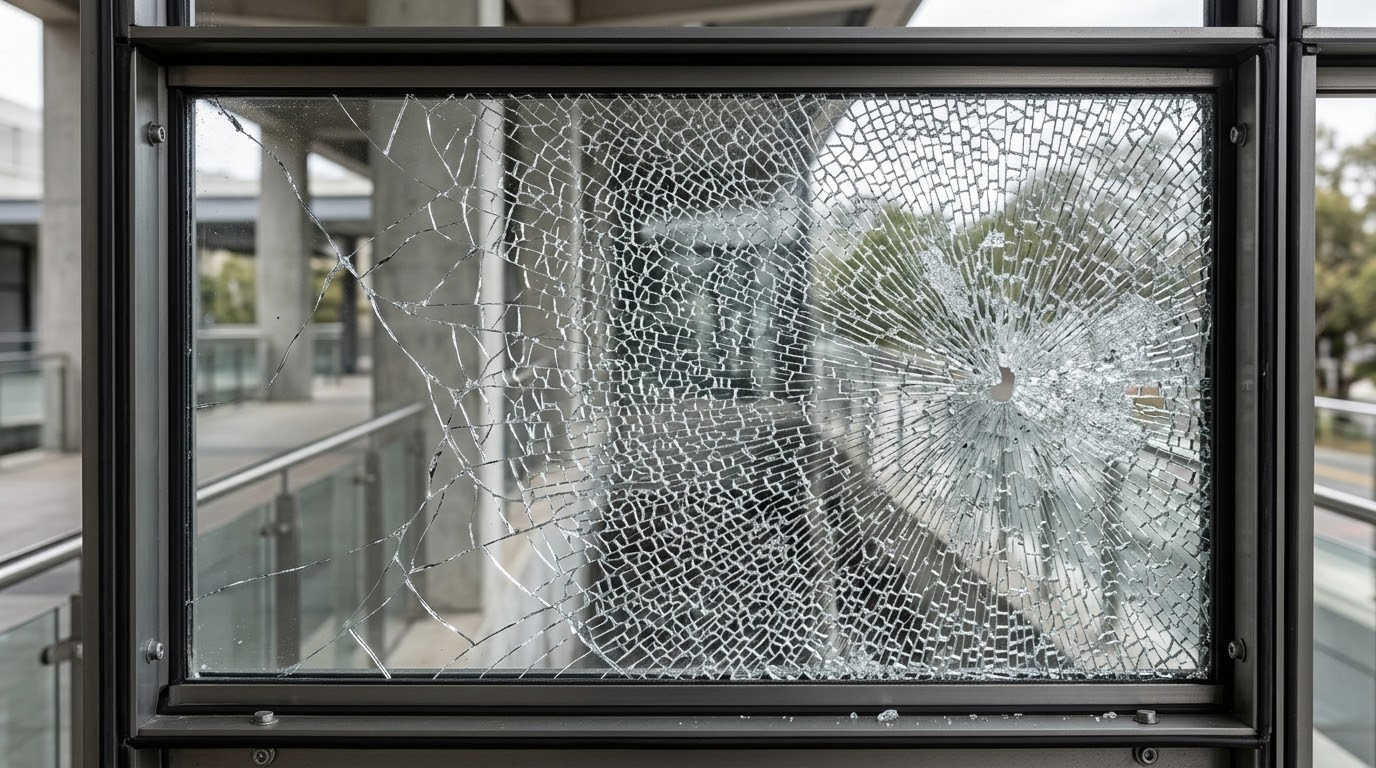
Your patio door gives a loud pop in the middle of the night. By morning, the opening is empty and the floor is covered in thousands of small, glittering pebbles.
Across town, a hailstone hits a window. The glass turns into a spiderweb of cracks, yet every piece stays in the frame.
Both homeowners have broken glass. But they are looking at two very different problems, and two very different next steps.
That difference is not random. Safety glass is built to fail in a planned way, and the way it fails tells a professional a lot about what happened and what has to happen next.
This guide explains why tempered and laminated glass behave so differently when damaged, which warning signs matter, and how a professional decides between repair, replacement, or a better-suited type of glass.
Safety Glass Is Designed to Break in a Specific Way
Many people think safety glass is glass that won’t break. That’s not quite right. Safety glass is glass that breaks in a way that is less likely to cause serious injury.
Ordinary glass, called annealed glass, is cooled slowly when it is made. When it breaks, it usually forms long, sharp, knife-like shards. Those shards are the reason safety glass exists.
In the United States, a federal safety standard sets requirements for glazing in products such as doors, storm doors, sliding patio doors, and shower and bathtub enclosures. You can read the scope of the U.S. Consumer Product Safety Commission’s safety standard for architectural glazing (16 CFR Part 1201). Local building codes add other locations, such as glass near doors, stairways, and floor level.
The two most common types of safety glass in homes are tempered and laminated. They protect people in opposite ways. Tempered glass breaks into small, blunt pieces. Laminated glass cracks but holds its pieces together.
That single design difference shapes almost every repair decision that follows.
Tempered Glass: Strong Until the Moment It Isn’t
Tempered glass is everywhere in a typical home. You will often find it in shower doors, sliding patio doors, glass entry doors, glass shelves, and some windows near doors or close to the floor.
It is far stronger than ordinary glass. According to this overview of tempered glass, it is about four times stronger than annealed glass. Yet when it does fail, it fails completely.
Why tempered glass breaks all at once
Tempered glass is heated and then cooled very quickly. The outer surfaces cool and harden first. This squeezes the surfaces tight, while the center of the glass stays under pulling tension.
Think of it like a tightly drawn bowstring. The tension is what makes the glass strong. It is also stored energy waiting to be released.
As long as the squeezed outer layer stays whole, the glass shrugs off bumps and pressure. But once a crack reaches through that outer layer into the tense center, the stored energy releases across the entire pane in a split second.
That is why tempered glass rarely shows a single crack for long. It usually goes from “fine” to thousands of small, rounded pieces almost instantly. Many homeowners describe a loud bang or pop when it happens.
The edges are the weak spot. The center of the pane can take a surprising blow, while a small chip on the edge can be enough to bring the whole sheet down.
Why tempered glass can’t be repaired
The strength of tempered glass comes from that balanced tension. Once it is broken or deeply damaged, the balance is gone, and no filler, resin, or adhesive can bring it back.
Tempered glass also can’t be cut, drilled, ground, or polished after tempering without breaking. The federal standard actually defines tempered glass this way. So a replacement can’t be trimmed to fit on site. It must be made to the exact size and shape first, then tempered.
For a homeowner, this means one thing: damaged tempered glass gets replaced, not repaired. Even a pane with a visible chip at the edge is living on borrowed time.
Laminated Glass: Cracked, but Still Holding On
Laminated glass works like a sandwich. Two or more layers of glass are bonded to a tough, clear plastic layer in between, usually a material called PVB (polyvinyl butyral).
When laminated glass is hit hard enough, the glass layers crack. But the broken pieces stick to the plastic layer instead of falling out. You often see a spiderweb or starburst pattern spreading from the point of impact, with the pane still in its frame.
This is why laminated glass is often chosen where falling glass would be dangerous, such as skylights and overhead glazing. It is also used where security or storm resistance matters, because it keeps a barrier in place even after it breaks.
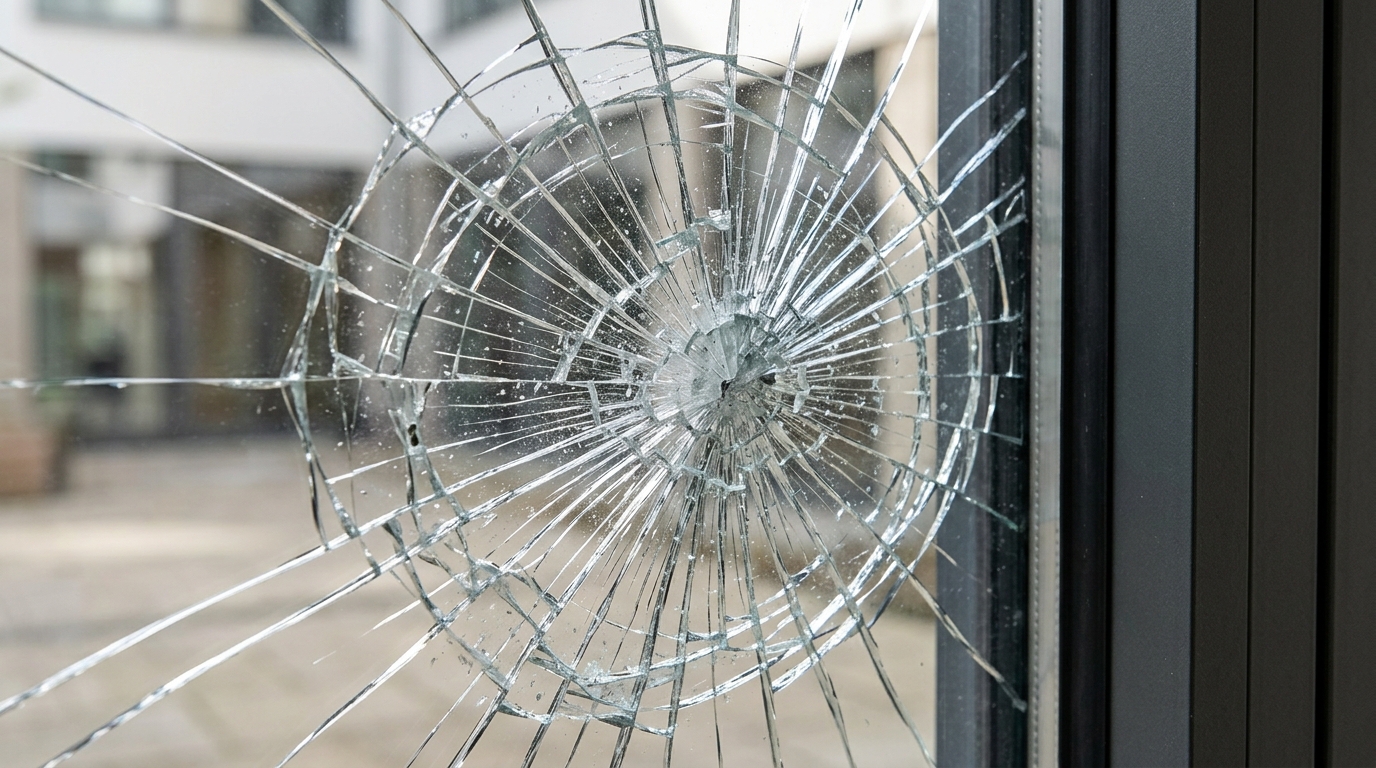
Why “still in one piece” doesn’t mean “still doing its job”
This is where many homeowners get caught out. A cracked laminated pane looks stable, so it is tempting to leave it alone for months.
But the glass layers are already broken. The pane has lost much of its original strength, and it may sag, flex, or give way under another impact, strong wind, or the weight of snow on an overhead panel.
The cracks can also let moisture reach the plastic layer over time. That can lead to cloudiness or separation at the edges, which affects both safety and appearance.
Some very small, shallow damage to laminated glass may be possible to treat. That depends on the exact damage, the glass, and where it is installed, so it needs a professional’s eyes. In most homes, a laminated pane with cracks running through it is treated as a replacement job. Its job now is simply to hold the line until that replacement happens.
Annealed Glass and Insulated Glass Units: Where They Fit In
Not every pane in your home is safety glass. Many standard windows use annealed glass, especially in locations where codes don’t require anything stronger.
Annealed glass behaves the opposite way from tempered glass. A crack can sit in the pane for a while and slowly grow, often starting from an edge. When it finally breaks, it forms large, sharp pieces that can cause deep cuts.
Most modern windows are also built as insulated glass units, often called IGUs. These are double- or triple-pane assemblies, with the panes spaced apart and sealed together around the edges as one unit.
The individual panes inside an IGU might be annealed, tempered, or laminated. That’s why the break pattern alone doesn’t always tell the full story. One pane may crack while the other stays perfect.
Here’s the key point: an IGU is one sealed assembly. If one pane cracks, the seal and the unit’s insulating performance are usually compromised. In most cases, the fix is replacing the sealed glass unit, not trying to patch a single pane. The good news is that this often doesn’t mean replacing the whole window. If the frame and sash are sound, the glass unit alone can frequently be replaced.
How Each Glass Type Behaves When Damaged
Here is a side-by-side look at what you are likely to see, and what it usually means for the repair decision.
| Glass type | What damage looks like | What stays in the frame | Usual professional outcome | Common places in a home |
| Tempered | Sudden failure into many small, rounded pieces, often with a loud pop | Little or nothing; the opening is usually left empty | Replacement with new glass made to exact size | Shower doors, patio doors, glass doors, panels near doors or floors |
| Laminated | Spiderweb or starburst cracks spreading from an impact point | The whole pane, held by the plastic layer | Usually replacement; limited treatment only for some minor damage after assessment | Skylights, overhead glass, security or storm-resistant windows |
| Annealed | A crack that may grow over time, then large, sharp shards | Varies; sharp pieces may stay loose in the frame | Replacement of the pane or sealed unit | Standard windows where safety glass isn’t required |
| Insulated glass unit | One pane cracks while the other may look fine; sometimes fogging between panes | The unit, but its seal may be compromised | Replacement of the sealed glass unit; the frame can often stay | Most modern double- and triple-pane windows |
The pattern gives clues, not a final answer. Because an IGU can mix glass types, a professional still needs to confirm exactly what is installed before ordering a replacement.
What Actually Causes Safety Glass to Break
Knowing why glass broke matters as much as knowing what type it is. If the cause isn’t found and fixed, the new pane can fail the same way.
Impact. This is the obvious one: a slammed door, a stray ball, a falling branch, or a hailstorm. Impact usually leaves a clear starting point, with cracks spreading out from it.
Edge damage. Glass edges are surprisingly delicate. A tiny chip from handling or installation can sit unnoticed under a frame for years. Then a cold night, a hot afternoon, or a gust of wind adds just enough stress for a crack to start from that weak spot. With tempered glass, that small chip can bring down the entire pane.
Thermal stress. Glass expands as it warms and shrinks as it cools. When one part of a pane heats much faster than another, such as sun on the center while the edges stay cold in the frame, uneven stress builds. Heavy partial shading and heat sources placed close to glass can add to it.
Frame pressure and hardware. Glass needs a little breathing room in its frame. If a frame shifts as a house settles, or if glass ends up pressing against metal, screws, hinges, or bumpers, pressure builds on the edge. Shower doors are a common example, where hardware and daily use put constant stress on the glass.
Hidden flaws in tempered glass. Very rarely, tempered glass breaks with no visible cause at all. One known reason is a tiny particle called a nickel sulfide inclusion, trapped in the glass when it is made. Over time it can grow and break the pane, sometimes years after manufacture. Glass makers note that this is very rare, and edge or surface damage is usually the more likely explanation.
So when a tempered shower door “just exploded,” it often wasn’t truly random. There was usually a hidden weakness or a source of stress that a professional can look for.
Warning Signs That Call for a Professional Assessment
Some damage is obvious. Other signs are easy to dismiss until they become a bigger problem. These are worth having checked promptly:
- A chip or crack at the edge of a tempered pane. This is the weakest point, and tempered glass can fail without further warning.
- A crack that grows or branches. Spreading damage means stress is still acting on the glass.
- A cracked laminated pane, even if it seems stable. It has already lost much of its strength.
- Cracks that appeared with no impact. This can point to frame pressure, thermal stress, or a hidden flaw.
- Glass that moves, rattles, or bows in the frame. The support around the pane may be failing.
- Fogging, moisture, or haze between the panes of a window. The seal on the insulated unit may have failed.
- Damage to door, shower, railing, or overhead glass. These locations carry higher injury risk and often have specific safety glazing requirements.
- The same window or door cracking again. Repeat breakage usually means the cause is in the frame or installation, not just the glass.
- Any pane that no longer keeps out weather or provides security. A compromised opening affects the whole home.
If you’re seeing one or more of these signs, Hansen Glass can take a look, identify the type of glass involved, and help you understand what needs to happen before the damage spreads.
How Professionals Decide Between Repair, Replacement, or an Upgrade
A good glass assessment is more than a look at the crack. A professional is answering three questions: what is this glass, why did it fail, and what should go back in its place?
Identifying the glass and its role
The first step is confirming exactly what is installed. Safety glass often carries a small permanent mark in a corner, but marks can be missing, hidden by the frame, or hard to read. An experienced glazier also looks at thickness, construction, coatings, and how the unit is built.
Location matters just as much. Glass in a door, shower enclosure, sliding patio door, or near a stairway or floor level often has to meet safety glazing requirements. A replacement must meet those requirements, even if the original glass was installed years ago under older rules.
Looking beyond the glass to the frame and installation
This is the step that separates a lasting fix from a repeat visit. If glass cracked from the edge with no impact, the professional checks for pressure points, frame movement, missing cushioning, or hardware pressing on the glass.
They also check whether the frame and sash are still sound. When they are, replacing only the glass or sealed unit is often enough. When the frame is warped, rotted, leaking, or keeps stressing the glass, a broader repair may make more sense.
Replacing like-for-like or choosing better-suited glass
Sometimes the right answer is an exact match. Other times, the break reveals that a different glass would serve the opening better. For example, a location that faces impact risk or sits overhead may benefit from glass that stays in place when it breaks.
Any change has to suit the frame, the weight of the glass, and the safety requirements for that spot. That is a decision best made with someone who can see the full picture.
This kind of careful evaluation is a core part of how Hansen Glass approaches window and glass work. Their team assesses whether a damaged opening needs only new glass or a larger replacement. They also handle window glass replacement and repair, as well as custom shower and tub enclosures, where tempered safety glass is common.
What to Do Safely While You Wait for an Assessment
The most useful thing you can do is keep people safe and leave the glass alone. Broken and cracked glass can shift without warning, and tempered glass that is already damaged can fail at the slightest touch.
Keep children, pets, and guests away from both sides of the damaged pane. If it’s a door or shower enclosure, stop using it. Don’t press on the glass, tap the crack, or try to open or close a cracked window or slider.
Take a few photos from a safe distance, including the whole pane and the area where the damage seems to start. Jot down what happened, such as a storm, an impact, a temperature swing, or nothing at all.
Those details help a professional understand the cause faster. Handling, removing, or securing broken glass is best left to trained technicians with the right protective equipment.
Conclusion
Safety glass doesn’t fail randomly. Tempered glass stores energy that releases all at once, leaving small, blunt pieces and an open gap. Laminated glass cracks but holds together, which can make serious damage look harmless.
Those different behaviors lead to different decisions. Tempered glass is replaced, never patched. Laminated glass that is cracked through has usually done its job and needs replacing. Insulated units are usually handled as one sealed assembly. In every case, finding the cause matters, or the new glass may meet the same fate.
If you’re looking at a broken or cracked pane and aren’t sure what you’re dealing with, Hansen Glass can assess the situation and help determine the right professional solution for your home.
Frequently Asked Questions
Can tempered glass ever be repaired once it’s cracked or chipped?
No. Tempered glass gets its strength from balanced internal tension, and damage upsets that balance for good. It also can’t be cut, drilled, or reshaped after tempering. A damaged tempered pane needs a new piece made to the exact size.
My laminated window is cracked but not falling out. Is it safe to leave it?
It’s holding together, which is what it was designed to do. But the glass layers are already broken, so the pane is much weaker than before. It’s best to have it assessed promptly rather than treating it as a permanent fix, especially for overhead glass or doors.
Why would tempered glass shatter when nobody touched it?
The most common reasons are hidden edge damage, pressure from the frame or hardware, and stress from temperature changes. Much more rarely, a tiny flaw inside the glass called a nickel sulfide inclusion can cause it. A professional can check for the likely cause so the new glass doesn’t fail the same way.
Do I need to replace the whole window or door, or just the glass?
Often just the glass or the sealed glass unit. If the frame and sash are in good condition, the glass can usually be replaced on its own. A full replacement is more likely when the frame is damaged, warped, leaking, or causing the glass to crack repeatedly.
How can I tell whether my glass is tempered or laminated?
Look for a small permanent mark etched into one corner, which often identifies safety glass. Where the glass is installed also gives clues, since doors and showers commonly use tempered glass. Because marks can be hidden or missing, a professional should confirm the glass type before a replacement is ordered.