
You’ve made the call and the appointment is on the calendar. Now you’re standing in front of a cracked pane, or a window that looks fogged from the inside, and wondering what will actually happen when the technician shows up.
Will they just pop in a new piece of glass? Take the whole window apart? Is there something you should do before they arrive?
Those are fair questions. Most homeowners deal with glass repair rarely, so the process can feel like a black box. The good news is that a professional repair follows a logical order, and every step has a reason behind it.
This guide walks through that process, from the first phone call to the final check. You’ll know what the technician is looking for, what your options might be, and how to get your home ready.
Recognizing What You’re Actually Looking At
Some glass problems are obvious. Others creep up so slowly that you only notice them one morning with your coffee.
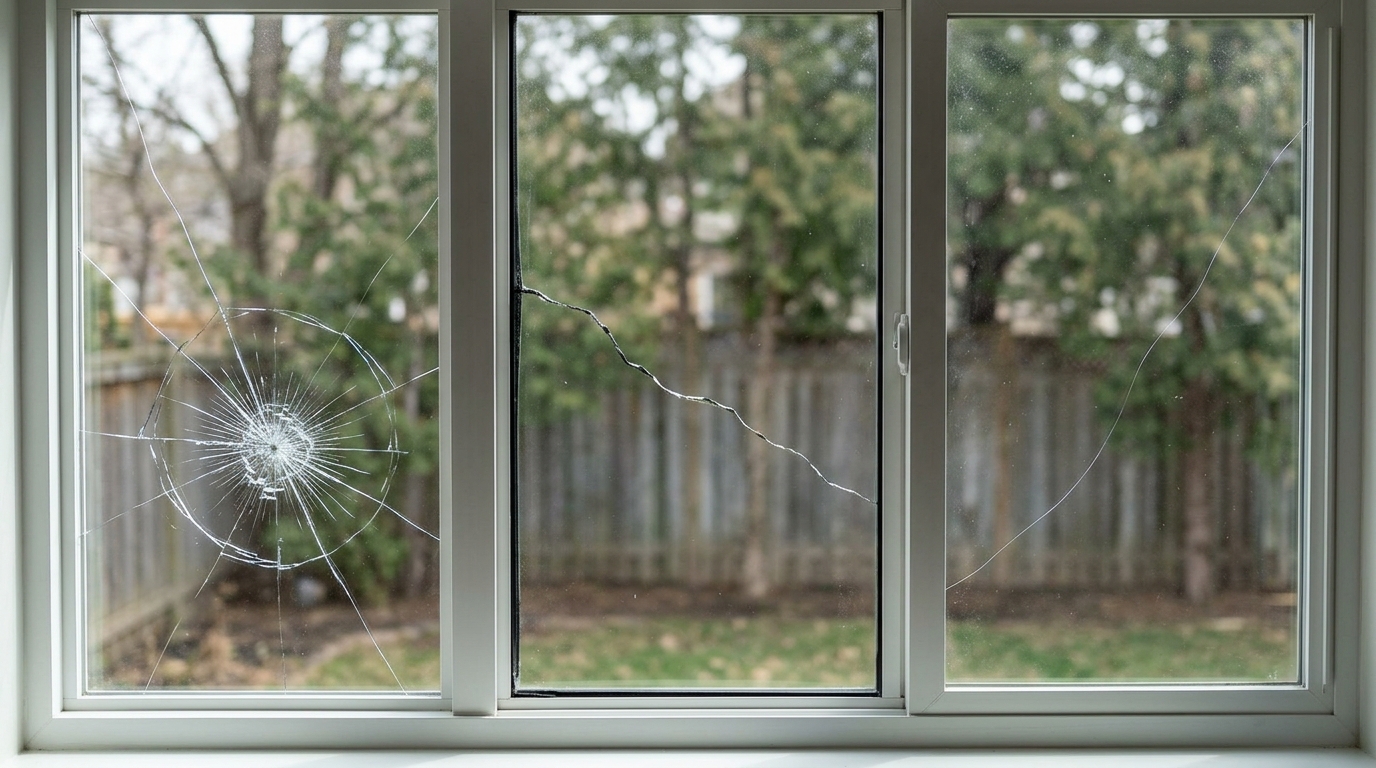
Cracks are the most familiar sign, but they don’t all look the same.
- A spiderweb pattern usually starts from a single point of impact.
- A long crack running in from the edge can point to stress rather than a hit.
- A hairline crack that seems a little longer each week is telling you it isn’t stable.
Fog or moisture between the panes is another common one. If you have double-pane windows and the haze sits inside the glass, where no cloth can reach it, that’s a strong sign the seal around the unit has broken down.
Drafts, cold spots, or hot spots near a window can mean the glass, the seal, or the frame is no longer doing its job. You might notice a room that never feels quite comfortable, or a curtain that moves when nothing’s open.
Windows or doors that stick, leave gaps, or won’t latch often get blamed on the hardware. Sometimes that’s right. Sometimes the frame has shifted or the glass is sitting wrong.
Changes in the frame, such as soft spots, swelling, staining or peeling paint around the window, suggest moisture has been getting in.
Treat these as clues, not a diagnosis. What you see is the symptom, and finding the cause is where a professional comes in.
What Usually Causes Glass and Window Problems
Knowing the likely causes helps you understand why a technician asks so many questions, and why they look at more than the broken piece.
Impact is the obvious one: a stray ball, a branch in a storm, a slammed door. The damage usually starts at a clear point and spreads outward.
Thermal stress is less obvious. Glass expands and contracts with temperature. When part of a pane heats up in direct sun while another part stays cool in shade or behind a blind, that uneven stress can crack it, especially if the edge already has a small chip. This is why some cracks seem to appear “out of nowhere.”
Seal breakdown affects insulated glass units. These are sealed assemblies of two or more panes with a space between them. Over years of sun, heat and temperature swings, the edge seal can wear out. Once it fails, moist air works its way in, and that’s the fog you see.
Moisture around the frame builds slowly. Water that gets past worn caulking or damaged trim can soften wood, cause swelling, and change how the glass sits in the opening.
Frame movement happens as homes settle and shift over time. A frame that drifts out of square can put pressure on the edges of the glass or stop a window from closing properly.
Earlier installation issues play a part too. Glass that wasn’t supported correctly, or had an edge chipped during handling, is more likely to fail later.
Here’s why this matters. If the cause isn’t addressed, new glass can end up with the same problem. A good repair deals with both the glass and the reason it failed.
Signs It’s Time to Call Now, Not Later
Not every glass problem is an emergency. A small, stable crack in a low-traffic spot can usually wait for a convenient appointment. Some situations shouldn’t wait, though.
Loose or unstable glass. If any part of the pane looks like it could shift or fall, keep people and pets well away from it. Don’t try to pull it out or push it back in. Glass under stress can move without warning.
An exposed opening. A missing or shattered pane leaves your home open to weather and unwanted entry. It’s a security issue as much as a comfort one.
Damage in a door or high-traffic area. Broken glass in a sliding door, entry door, or a window near the floor is far more likely to injure someone, simply because people move past it all day.
A door that won’t close or latch. If a sliding door sticks or sits crooked after the glass is damaged, don’t force it. Forcing can make the damage worse.
A crack that’s actively growing. If you can see a crack lengthening over days, the glass is under stress and could fail.
When you call, say clearly that the situation feels urgent. That helps the glass company prioritize your visit.
The First Call: What the Glass Company Needs to Know
The first conversation sets up everything that follows, and a little detail goes a long way. Be ready to explain:
- where the damage is (which room, which floor, and whether the outside is easy to reach)
- what type of glass it is (a window, sliding door, shower enclosure, or something else)
- what you’re noticing (a crack, fog, a draft, sticking)
- how it happened, if you know
- whether the opening is currently secure
If it’s safe to do so without getting close to loose glass, photos help. One wide shot of the whole window and one closer view of the damage give the company a clearer picture before anyone arrives.
Expect an honest answer about timing, which might be “we need to see it first.” That isn’t a delay tactic. Glass comes in many types, thicknesses, coatings and sizes. Some replacement glass is easy to source. Some has to be ordered or made to fit.
That’s why many repairs follow a two-visit pattern. The technician assesses and measures on the first visit, then returns to install once the correct glass is ready.
The On-Site Assessment: Why the Technician Looks Beyond the Crack
This step is the biggest difference between a quick glass swap and a proper repair. A careful technician doesn’t just measure the broken piece and leave. They look at the whole window or door, because the visible damage may be only part of the story.
The glass type comes first. Single-pane, double-pane, tempered, laminated, tinted, and coated glass all look similar at a glance. They aren’t interchangeable, and putting the wrong type into an opening can affect safety, comfort and appearance.
The safety marking. Tempered safety glass often carries a small etched stamp in one corner. It helps the technician confirm what was originally installed and what the opening needs.
Seals and glazing. The technician checks whether the seals around the glass are intact, and whether there are signs of moisture between panes.
The frame. Soft spots, warping, rot or water staining around the frame can explain why glass failed. They also affect how well new glass will sit.
Hardware and alignment. On sliding doors and operable windows, rollers, tracks, locks, hinges and the sash all get a look. A door that drags may have a track problem as well as broken glass.
Measuring the full opening. Glass sits inside the frame, partly hidden behind trim or stops. The technician measures the opening, not just the visible glass, so the new piece fits correctly.
Picture a bedroom window that’s fogged between the panes, with a faint water stain on the sill below. A quick look says “replace the glass.” A proper assessment asks whether moisture has also been getting into the frame. Those may be two separate issues, and they’re far easier to handle together.
This is a good time to ask questions. What do you think caused this? What glass will go in, and why? Is anything else on this window worth watching?
If you’re dealing with cracked, fogged or broken glass at home, Hansen Glass can assess the whole window, not just the damaged pane, and help determine the right professional solution.
Repair, Glass-Only Replacement, or Something More?
Once the assessment is done, the conversation turns to options. The right path depends on what the technician found, not just what you first noticed.
Here’s a general picture of how common situations tend to play out:
| What you noticed | What it often points to | Likely professional path |
| Cracked or broken pane in a solid frame | Damage limited to the glass | Replace the glass and keep the existing frame |
| Fog or moisture between the panes | The insulated glass unit’s seal has failed | Replace the insulated glass unit |
| Crack plus a soft or stained frame | Glass damage along with moisture in the frame | Address the frame condition before or alongside new glass |
| Broken door glass, and the door sticks or won’t latch | Glass damage plus possible track, hardware or alignment issues | Correct safety-rated glass, plus a check of hardware and alignment |
| Cracks that keep coming back without impact | Stress from frame movement, edge damage or poor support | Find and address the cause before replacing the glass |
| Several parts failing on an older window | General wear across the whole unit | Talk through whether repair still makes sense or a larger replacement does |
In many homes, glass-only replacement is the most common outcome. If the frame is sound, square and working properly, there’s often no reason to replace more than the glass.
Whatever the recommendation, a good technician should be able to explain why. “It needs replacing” is a conclusion. “The seal has failed, so the moisture is trapped inside where it can’t be cleaned” is an explanation, and you deserve the explanation.
Why the Right Glass Matters: Safety Glazing in Plain English
Not all glass behaves the same way when it breaks, and that difference is a big part of why the assessment matters.
Standard glass, often called annealed glass, breaks into large, sharp pieces. It’s common in many ordinary windows.
Tempered glass is heat-treated to make it much stronger than standard glass. When it does break, it crumbles into many small pieces rather than long jagged shards, which lowers the risk of serious cuts.
Laminated glass is made of layers bonded together with a clear interlayer. When it breaks, the pieces tend to stay stuck to that layer instead of falling out. That’s useful for safety and security.
So where does this matter? In places where people could walk, slip or fall into glass. Doors, sliding glass doors, and shower and bathtub enclosures are classic examples.
At the federal level, the U.S. Consumer Product Safety Commission’s Safety Standard for Architectural Glazing Materials was issued to reduce or eliminate risks of injuries associated with walking, running, or falling through or against glazing materials. State and local building codes add their own requirements on top. jurist
This has a practical effect on your repair. Tempered glass can’t be cut after it’s been tempered, so it has to be made to the exact size first. That’s one reason a door or shower panel may need to be ordered rather than cut on the spot.
When the technician recommends a glass type, it’s fair to ask: “Does this meet the safety requirements for this location?” A qualified professional should answer that clearly.
What Happens During the Repair Visit
Every job is a little different, but most professional glass repairs follow the same basic rhythm. Here’s what you can expect to see, and why each stage matters.
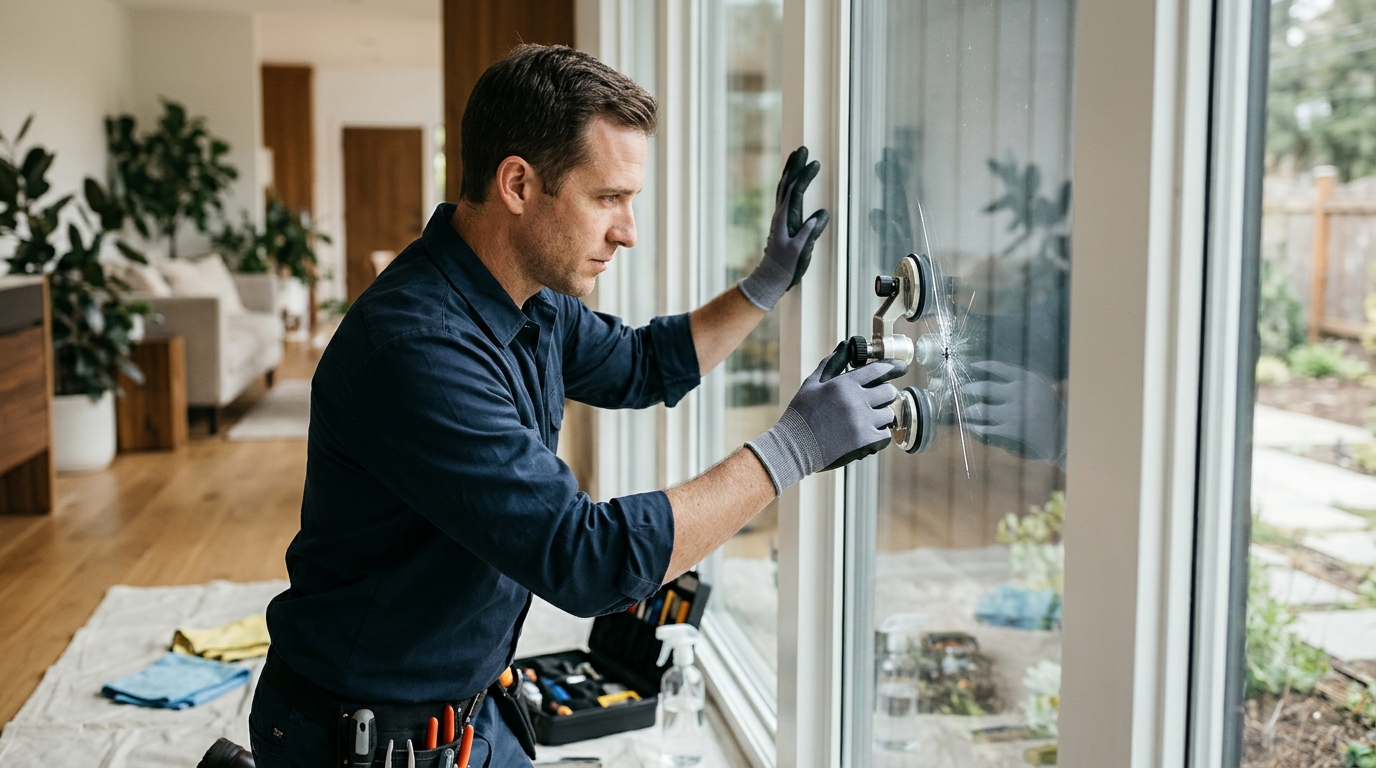
Arrival and walkthrough. The technician confirms which window or door is being worked on and checks that the replacement glass matches what was planned. They set up a work zone, often with drop cloths, so debris stays contained.
Removing the old glass. The glass is held in place by stops, trim or glazing beads, which are the strips that frame it inside the opening. These are removed first, and then the old glass is carefully taken out. A sliding door panel may need to come out of its track.
This is where training really counts. Cracked glass can be under tension and may shift or break further as it’s handled. Professionals use protective gear and controlled methods to keep everyone safe.
Inspecting and cleaning the frame. With the glass out, the technician can see parts of the frame that were hidden, which is often where the real story shows up. They clean out old sealant, dirt and debris from the frame channels. New glass needs a clean, even surface to seal properly.
Setting the new glass. The new pane or unit rests on small supports called setting blocks. These keep the glass off the bottom of the frame so its weight is spread evenly and the edges aren’t pressed against hard surfaces.
The glass is then sealed in place with sealant or glazing tape, and the stops or trim go back on. The goal is a secure, weather-tight fit.
The quality check. The technician checks for gaps, alignment and appearance. On a window or door that opens, they test that it moves smoothly and locks properly. They also clean off fingerprints and marks. A good technician will invite you to take a look yourself before they leave.
Expect some noise and a few unfamiliar tools, but nothing like a renovation. When the right glass is ready, a standard repair usually fits into a single visit.
Getting Your Home Ready Before the Technician Arrives
A little preparation helps the visit go faster and keeps everyone safe. You don’t need to empty the room. The technician just needs space and clear access.
- Clear a few feet around the window or door inside. Move furniture, plants, lamps and decorations back from the work area.
- Take down curtains or blinds if you can do it easily. If they’re hard to remove, mention it when you confirm the appointment.
- Check the outside, too. Many repairs need exterior access, so move patio furniture, grills and hoses, and let the company know about overgrown shrubs near the window.
- Clear the path in. The technician will carry glass and tools between their vehicle and your window, so a clear walkway matters.
- Keep pets and children in another room. Tools, glass and open doors don’t mix well with curious little ones.
- Mention anything unusual ahead of time. Gate codes, tricky parking, alarm sensors on the window, or a second-story location all help with planning.
- Leave any broken glass where it is. Don’t try to remove loose pieces. Let the professional handle them safely.
- Jot down your questions. What caused it? What glass is going in? How long should the sealant cure? What does the warranty cover?
After the Work Is Done: Cure Time, Care, and Follow-Up
The visit ends, but a couple of things are worth knowing for the days afterward.
Give the sealant time. Sealants need time to cure fully. Ask the technician how long to wait before cleaning the glass firmly, pressing on it, or opening and closing it heavily. Following that advice helps the seal set properly.
Clean gently. A soft cloth and a mild glass cleaner are usually enough. Skip abrasive pads, and ask whether your glass has a coating that needs special care.
Know what to report. Contact the company if you notice any of these after the repair:
- a draft near the new glass
- moisture or fogging inside a new insulated unit
- a window or door that suddenly sticks
- a visible gap in the seal
These are worth checking early.
Understand your warranty. Ask what’s covered and for how long. Glass and workmanship are sometimes covered separately, so keep the paperwork somewhere easy to find.
There’s also a comfort benefit to getting this right. ENERGY STAR notes that windows with air leaks or drafts waste energy, and that degraded windows can also leak water. A properly sealed repair helps your home hold its temperature. The U.S. Department of Energy’s Energy Saver guide to energy-efficient windows is a helpful read if you want to learn more about how windows affect home comfort. energystar
If something doesn’t look or feel right after a repair, or you’re unsure whether a window needs attention at all, Hansen Glass can take a look and explain what’s going on.
Conclusion: Knowing the Process Means Better Decisions
Glass problems can feel unsettling, especially when you don’t know what happens next. Once you understand the process, it becomes much more manageable:
- A clear first call.
- A careful assessment that looks beyond the crack.
- An honest explanation of your options.
- The right glass for the location.
- A careful installation.
- A final check you’re invited to share.
Knowing these steps makes you a better partner in the repair. You’ll ask sharper questions, spot when something’s being skipped, and make decisions based on what your window actually needs.
If you’re dealing with cracked, broken or fogged glass at home, Hansen Glass can assess the situation and walk you through the right professional solution, clearly and without pressure.
Frequently Asked Questions
How long does a professional glass repair visit usually take?
It depends on the job. A standard replacement with glass that’s readily available can often be finished in one visit. Custom sizes, tempered safety glass that has to be made to size, or specialty coatings usually mean an assessment visit first and an installation visit once the glass is ready. Ask the company for a realistic timeline after they’ve seen the damage.
Can the technician replace just the glass without replacing the whole window?
Often, yes. If the frame is solid, square and working properly, glass-only replacement is a common and sensible choice. A full window replacement usually only comes up when the frame is badly damaged or several parts of the window are failing.
Why can’t fogged double-pane glass simply be cleaned?
The fog sits between the panes, inside a sealed space that can’t be reached from either side. It’s there because the edge seal has failed and let moisture in. Even if the haze faded for a while, the broken seal would let moisture back in. The lasting fix is replacing the insulated glass unit.
Do I need to be home while the work is done?
In most cases it helps to have someone there, at least at the start and the end. That lets you confirm the work in the walkthrough and do the final check together. Inside access is usually needed too. Confirm the details with the glass company when you book.
How do I know the replacement glass is the right type for my window or door?
Ask the technician what glass they’re installing and why. For doors, sliding doors, shower enclosures and glass near floors or walkways, ask whether it meets the safety requirements for that location. A qualified professional should explain their choice clearly, not just tell you the pane will fit.