
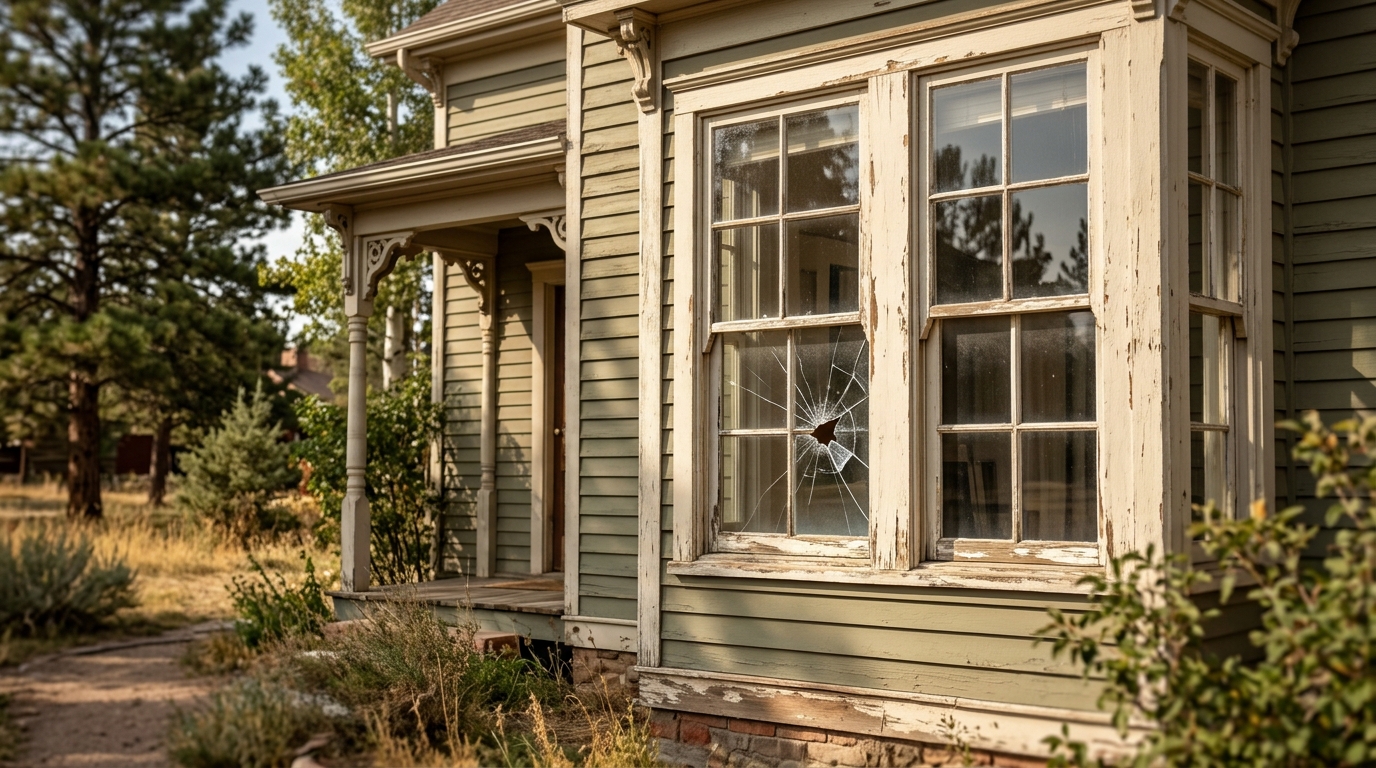
A summer hailstorm rolls across Parker. When it passes, you find a cracked pane in the front window of your older home. It’s the window with slightly wavy glass that makes the yard look like it’s underwater when you walk past.
Your first thought is simple: just replace the glass.
In a newer home, that’s often close to true. In a historic or older home, the broken pane is usually the easy part. What sits around it decides how the repair should go: the old glass, the way it’s held in place, the wood, the paint, and sometimes the rules that apply to the house itself.
This guide explains what makes the assessment more involved, what a professional looks at, and why a careful first look protects your home’s safety, comfort, and character.
Why Broken Glass in an Older Home Isn’t a Simple Swap
Most modern windows are factory-built units. The glass, frame, and seals are designed together, measured to standard sizes, and made to be replaced in predictable ways.
Older windows are different. Many were built and fitted by hand. The glass was set into a wooden frame called a sash, held with small metal clips called glazing points, and sealed with putty along the outside edge.
That means the glass isn’t a separate part you can unplug. It’s one piece of a small system: glass, putty, sash, and frame all working together to keep out wind and water.
When one part fails, a professional needs to check the others. A crack can be the first visible sign of a problem that started somewhere else, such as a sash that has shifted, wood that has swollen, or putty that stopped protecting the frame years ago.
“Historic” vs. “Older”: Which One Describes Your Parker-Area Home?
Parker has grown quickly over the years, so the homes here range widely in age. Some properties have early farmhouse roots or original wood windows. Many more were built in the 1970s, 80s, and 90s and now have windows that are several decades old.
Both types need a closer look, but for different reasons.
Truly historic homes often have original wood sashes, single-pane glass, and putty glazing. The concerns here are preserving original materials, matching old glass, and handling old paint carefully.
Older, non-historic homes may have early double-pane glass, aging aluminum or wood frames, and glass sizes that aren’t common anymore. Here the questions lean toward seal condition, frame wear, and whether the replacement glass suits the opening and any current safety requirements.
Knowing which category your home falls into helps set expectations. A 1920s-style sash and a 1985 slider can both have “broken glass,” but the assessment for each will look very different.
What Makes the Repair Assessment More Complex
This is the heart of it. Several factors stack up in older homes, and a professional has to weigh all of them before recommending a path.
The Glass Itself Is Different
Old window glass was made differently from today’s flat, uniform glass. Depending on its age, it may have gentle waves, tiny bubbles called “seeds,” and slight changes in thickness across the pane.
Those small flaws are a big part of an older home’s look. Preservation guidance from Historic New England points out that flat modern glass catches light very differently than textured historic glass, so a single mismatched pane can stand out from across the room.
Matching that character takes a trained eye. A professional may need to compare the broken pane with the surrounding glass, consider the home’s era, and look at what replacement options truly blend in.
The Way the Glass Is Held in Place
In many older windows, the glass sits in a narrow ledge in the sash called a rabbet. It is held by glazing points and sealed with putty on the outside.
Over decades, that putty can harden until it’s almost like stone. In some windows, the rabbet was even carved slightly to fit a specific piece of glass. That makes each opening a little unique.
Modern materials don’t always behave well in these openings. Using the wrong sealant on an old putty-glazed window can trap moisture or fail early. Part of the assessment is figuring out how the glass is currently held and which approach will respect that construction.
Hidden Damage in the Sash and Frame
Broken glass is visible. Wood decay often isn’t.
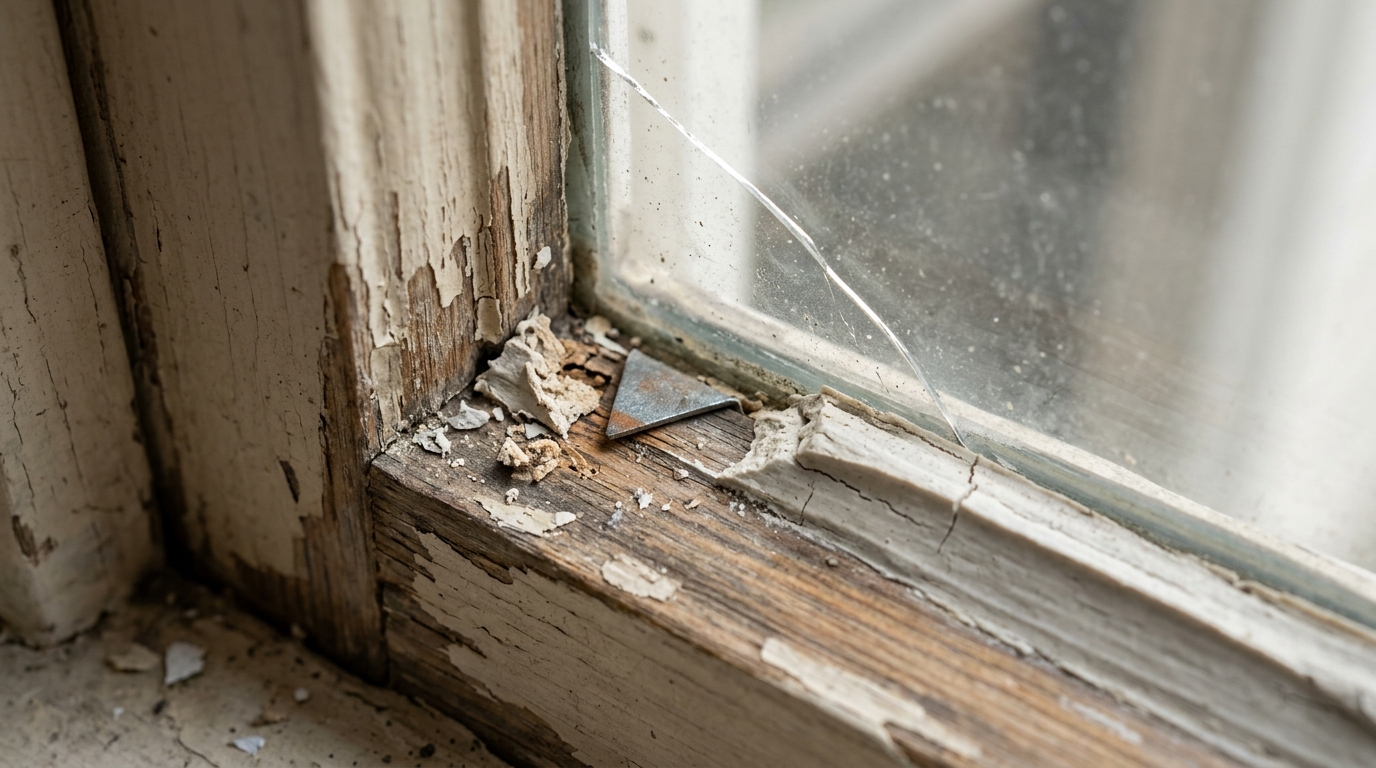
The National Park Service’s Preservation Brief 9 on historic wooden windows identifies moisture as the main cause of wooden window decay. It also notes that water tends to collect at the sill, the corners of the bottom rail, and the joints where pieces meet.
The same guidance makes an encouraging point too: peeling paint doesn’t automatically mean the wood is ruined. Sound wood is often hiding under unsightly paint.
That’s exactly why a professional checks. The goal is to separate surface problems from structural ones, so you don’t replace more than needed or ignore something that will cause trouble later.
Neighboring Panes Are Fragile Too
Many older windows have several small panes divided by thin wooden strips called muntins. When one pane breaks, its neighbors may still be original, and they may be just as fragile.
Removing old putty and glass can put stress on nearby panes. Guidance from the Wisconsin Historical Society shows how big the difference in technique can be: careful, controlled heat removal may lose only about 5% of old wavy glass, while forcing old putty out cold can lose around half.
That’s a powerful reason this work belongs with someone who handles old glass regularly. Once original glass is gone, it can’t be recreated exactly.
Lead Paint and Older Materials
If your home was built before 1978, there’s a real chance that some paint on or around the windows contains lead. According to the EPA’s Lead Renovation, Repair and Painting Program, about three-quarters of U.S. homes built before 1978 still contain some lead-based paint.
Windows are a particular concern. The EPA notes that worn paint on surfaces with constant friction, like window sills, can create hazardous chips and dust. Repair work that disturbs that paint can create dust too.
Federal rules require anyone paid to disturb painted surfaces in pre-1978 homes to be certified and trained in lead-safe work practices. So part of the assessment is simply knowing the home’s age and planning the work safely around it.
Safety Glass Rules for Certain Openings
Older windows were installed under older building standards. Today, building codes generally require safety glass in certain locations, such as glass in or near doors, large panes close to the floor, and glass near tubs or showers.
That means the “same glass as before” may not always be the right answer. If a broken pane sits in one of these locations, the replacement may need to meet current safety requirements while still fitting the existing frame.
A professional can check the location of the opening and recommend glass that suits both the window and the space.
Preservation Guidelines and Local Review
If your home is formally designated as historic, or sits within a historic district, there may be guidelines about what changes are allowed.
In Colorado, the state preservation office at History Colorado generally recommends repairing historic windows rather than replacing them. Some local design standards in the state, such as those in Pueblo’s historic window guidance, also encourage reusing original glass where possible and do not allow tinted or reflective glass on designated properties.
Not every older Parker-area home is designated, and rules vary by property and location. Still, it’s worth knowing your home’s status before work begins, so the repair plan doesn’t create problems later.
How Parker’s Climate Adds Stress to Older Windows
Parker’s weather is lovely to live in, but it’s tough on old windows.
Strong sun at high elevation dries out paint and putty faster. Once paint breaks down, putty loses its protection, and the wood underneath becomes exposed.
Wide temperature swings cause glass, wood, and metal to expand and contract at different rates. A cold night after a warm, sunny afternoon puts small, repeated stress on panes and their edges. Over years, that can turn a tiny chip into a running crack.
Dry air can shrink wood slightly, loosening the fit between glass and sash. Panes may start to rattle or shift.
Hail is a familiar part of life along Colorado’s Front Range. Older single-pane glass is generally thinner than many modern window panes, and putty that has already dried out offers less cushion when impact hits.
None of this means older windows can’t last. It means that when glass breaks, a professional should look at whether the climate has quietly weakened other parts of the window too.
Warning Signs Worth Noticing Before the Assessment
You don’t need tools or technical skill to help the process. Simply noticing a few things from a safe distance can make the assessment more useful.
Keep an eye out for:
- Cracks that grow over days or weeks, especially from the corners or edges
- Loose, cracked, or missing putty along the outside edges of the glass
- Peeling, blistering, or flaking paint on the sill or lower parts of the sash
- Wood that looks dark, soft, or crumbly near joints and corners
- Rattling glass when doors close or wind picks up
- Drafts you can feel around a window that used to be comfortable
- Fog or moisture between panes in older double-pane windows, which can point to a failed seal
- Sashes that stick, drop, or won’t stay open
- Other damaged panes in the same window or nearby windows after a storm
Taking a few photos and noting roughly when your home was built will help the professional understand the situation quickly. Please don’t try to remove broken pieces or press on cracked glass. Old glass can shift and fall without warning.
What a Professional Assessment Looks At
A good assessment is thorough without being complicated. Preservation guidance from the National Park Service recommends evaluating windows one unit at a time and noting location, paint, frame and sill, sash, glazing, hardware, and overall condition.
Here’s how those areas translate into practical questions for an older home:
| Assessment Area | What’s Checked | Why It Matters in an Older Home |
| Glass type | Age, texture, thickness, single or double pane | Determines how well replacement glass can match and whether original glass can be saved |
| Glazing method | Putty, glazing points, stops, or other retention | Old putty-glazed windows need compatible materials and careful handling |
| Neighboring panes | Condition of surrounding original glass | Removal work can put fragile nearby panes at risk |
| Sash condition | Rails, stiles, muntins, and joints | Shifting or weakened joints may have contributed to the break |
| Frame and sill | Rot, moisture damage, slope, drainage | Hidden decay can undermine any new glass |
| Paint | Condition and likely age of paint layers | Pre-1978 homes may have lead paint that requires lead-safe work |
| Opening location | Near doors, floors, tubs, or showers | Current safety glass requirements may apply |
| Home status | Historic designation or district guidelines | May affect which repair or replacement options are appropriate |
| Overall function | Operation, drafts, hardware, seals | Shows whether the issue is just the glass or the whole window |
This kind of evaluation is what separates a quick patch from a lasting repair. If you’re dealing with broken glass in an older Parker-area home, Hansen Glass can assess the window, the glass, and the condition around it before recommending the right professional solution.
Possible Outcomes: Repair, Matched Replacement, or More
Once the assessment is done, the path forward usually falls into one of a few directions. Every home is different, so the right answer depends on what the inspection finds.
Keeping original glass where possible. If only one pane is damaged and the rest are sound, the priority is often protecting the surrounding original glass while the broken pane is addressed.
Replacement glass chosen to suit the window. When a pane can’t be saved, the replacement should fit both the opening and the home’s character. In a historic window, that may mean looking for glass that blends with the older panes. In a location that requires it, it means safety glass that meets current standards.
Attention to the sash or frame. If the assessment finds rot, loose joints, or failed putty across the window, the glass alone won’t solve the problem. Those issues need to be addressed so the new glass has a sound place to sit.
Updating glass in older, non-historic homes. In homes from later decades, the assessment may show that an aging double-pane unit has reached the end of its life. In that case, replacing the glass unit with a properly fitted modern one can improve comfort and clarity.
Hansen Glass can help Parker-area homeowners understand which of these paths fits their window, so the solution matches the home rather than forcing the home to match a standard part.
When to Call a Professional and Why Waiting Makes Things Worse
A cracked pane can feel like something to deal with “eventually.” In an older home, waiting tends to make the job bigger.
Here’s why:
Cracks spread. Temperature swings and wind pressure keep working on damaged glass. A small crack can run across the pane or cause pieces to loosen.
Water finds openings. Once glass or putty fails, rain and melting snow can reach the wood. Moisture is the main cause of decay in wooden windows, and decay spreads quietly.
Safety risk increases. Loose or cracked glass can fall, especially in windows that open and close or sit near busy areas of the house.
More original material is lost. The longer damage sits, the more likely it is that surrounding panes, putty, or wood will also need attention.
Call for a professional assessment promptly if glass is loose, cracked across a large area, located near a door or walkway, or if you notice moisture, soft wood, or drafts around the window. In the meantime, keep children and pets away from the damaged area.
Conclusion
That cracked pane after a hailstorm is rarely just about glass. In a historic or older Parker-area home, it’s connected to old putty, aging wood, fragile neighboring panes, possible lead paint, current safety requirements, and sometimes preservation guidelines.
That’s what makes the assessment more complex, and it’s also what makes it so valuable. A careful look at the whole window helps protect what’s original, fixes the real cause of the problem, and keeps your home safe and comfortable through Colorado’s changing seasons.
If your older home has broken or cracked glass, Hansen Glass can take a careful look and help you understand the best way forward for your window and your home.
Frequently Asked Questions
Can cracked original glass in an old window be saved?
Sometimes. Preservation guidance generally puts repair ahead of replacement, and in some cases cracked historic glass can be stabilized. Whether that’s possible depends on how badly the glass is broken, its location, and whether the repair will be stable for daily use. A professional assessment is the best way to find out.
Why can’t any replacement glass be used in my historic window?
Modern flat glass looks and reflects light differently than older glass with waves and seeds. In a window with several original panes, a mismatched pane can stand out. The opening itself may also be uneven or slightly unique, so the replacement has to fit correctly as well as look right.
Is it safe to leave a cracked pane in place until the assessment?
A small, stable crack may hold for a short time, but cracked glass can shift or fall without warning. Avoid touching or pressing on it, keep people and pets away, and schedule an assessment soon, especially if the glass is near a door or walkway.
Does my older home need special handling because of lead paint?
If your home was built before 1978, the paint on and around your windows may contain lead. The EPA requires anyone paid to disturb painted surfaces in pre-1978 homes to be certified and trained in lead-safe work practices. Knowing your home’s build year helps the professional plan the work safely.
Do I need permission to repair windows on a historic property in Colorado?
It depends on whether your home is formally designated or sits in a historic district, and on local rules. Many Colorado preservation guidelines favor repairing original windows and reusing original glass where possible. If you’re unsure of your home’s status, check with your local planning office before work begins.