
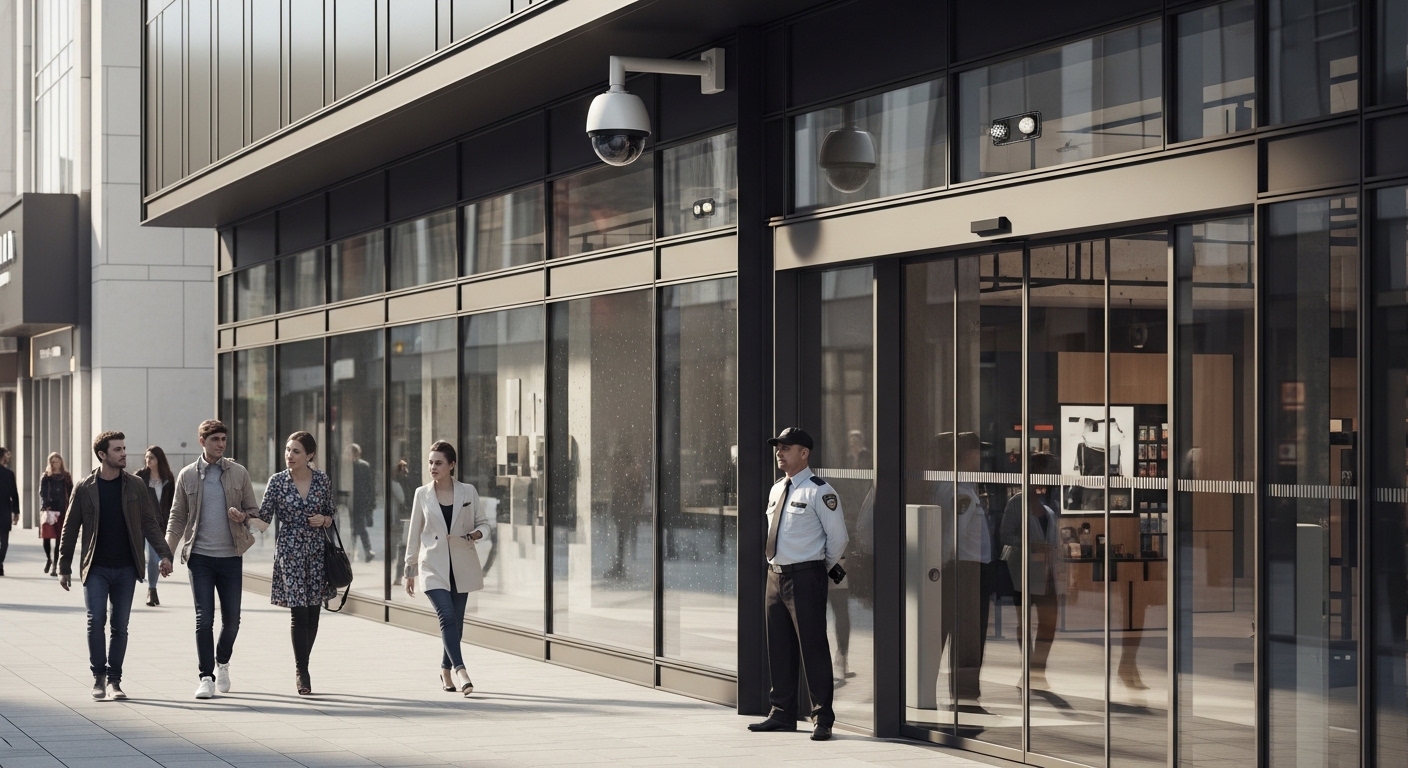
Commercial storefronts are the first thing a thief sees before they try to break in. If your storefront looks weak, it sends the wrong message. But when it looks strong and solid, most criminals will just walk away.
Retail crime is not slowing down. According to the National Retail Federation (NRF), retailers reported an 18% increase in shoplifting incidents in 2024 compared to 2023, and violence during theft events went up 17% in that same period. Those are big numbers. And the scariest part? Most of these crimes start at the front of the store.
That is why your commercial storefront is so important. It is not just a door or a window. It is your shield.
Why Your Storefront Is Your Store’s First Shield
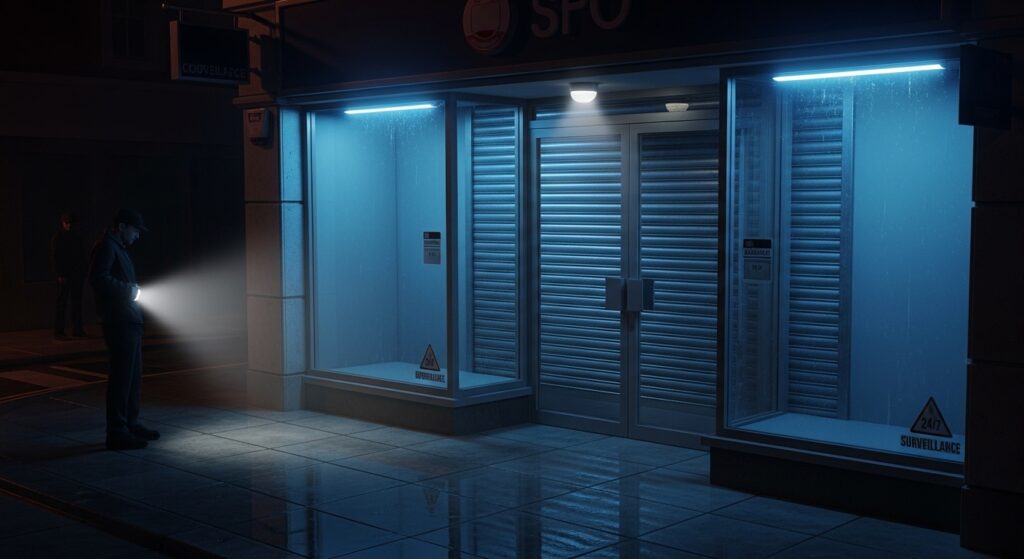
Think about it this way: a burglar is not going to try to break through a wall. They go for the easiest opening. That is almost always the front door or a window.
I once walked past a small electronics shop that had a basic glass door with a simple lock. No grille. No security film. Two weeks later, the owner told me someone had kicked it in overnight and taken everything near the front. A stronger storefront barrier would have made a big difference.
Most burglars enter through a door. This is not a guess. This is backed by security research. That makes your door and your front windows the most important parts of your whole retail security system. If those hold, you have a real chance of stopping a break-in before it starts.
How a Strong Storefront Deters Crime Before It Happens
The goal is not just to stop someone after they try. The goal is to make them not try at all.
Visible deterrence is one of the most powerful tools in retail security. When a criminal sees rolling steel shutters, a heavy security door, or reinforced glass, they think twice. It is not worth the time or the noise. They move on.
A storefront with strong physical barriers tells the world: “This place is protected.” That message alone reduces your risk. Pair that with security cameras at the entrance and alarm systems, and you have a layered defense that most opportunistic thieves will not bother with.
Storefront Doors: Your Strongest Physical Barrier
Your front door is doing a lot of work. It welcomes customers during the day. At night, it stands between your merchandise and the street.
Not all doors are equal. Steel doors and aluminum doors can be rated up to UL 752 Level 8 for ballistic resistance and forced-entry protection. That means they can withstand a serious impact, not just a light kick. For stores in high-traffic urban areas or places that have had break-ins before, this kind of security door is worth every cent.
Most retailers now look for materials rated to UL Level 3 at a minimum. According to Total Security Solutions, a Level 3-rated door and frame can stop the handguns most commonly used in attacks and armed robberies. If that sounds extreme, think about how fast the risk landscape has changed in retail over the last five years.
Choosing the Right Door Material for Your Storefront
The right door depends on where your store is and what you sell.
If you run a luxury retail store or sell high-value electronics, go for steel or glass-clad polycarbonate (GCP) doors with reinforced framing. The glass matters as much as the door itself. If the glass stops bullets but the frame can be pulled apart, you are not actually safe.
For stores with more foot traffic and a welcoming feel, aluminum doors can offer a nice balance between looks and security. They come in different finishes and can still be rated for forced-entry resistance. The key is to make sure your frame is just as tough as your glass. Weak frames are a common overlooked weakness in storefront security systems.
Security Grilles, Shutters, and Gates: After-Hours Defense
This is where many retailers either get it right or leave a big gap. During the day, you want customers to come in easily. After hours, you want your store locked down tight.
Rolling steel shutters and security grilles are one of the best ways to do that. They pull down over your windows and doors like a second skin. A thief trying to get through a properly installed rolling shutter faces a serious physical challenge. It takes time. It makes noise. It draws attention. That alone stops most break-ins.
I have talked to several store owners who installed retractable security grilles after their first break-in. Almost all of them said they wished they had done it sooner. The cost of the grille was a fraction of what they lost in the robbery.
Transparent Grilles vs. Solid Shutters: What Works Best?
Here is a detail most people do not think about: see-through grilles let people look into your store even when it is closed. That means your window display still works. Shoppers walking past at night can still see your products.
Transparent security grilles made from aluminum or clear polycarbonate give you that visibility while still blocking access. They look modern and do not make your store look like a fortress. That is good for branding and for safety.
Solid steel shutters, on the other hand, offer maximum protection. They block everything. If your store is in a high-risk area or has had multiple break-ins, solid shutters may be the smarter call. You can always repaint them to match your brand colors.
Ballistic Glass and Window Security: More Important Than You Think
Most store owners think about their doors first. Windows are usually second, or not thought about at all. That is a mistake.
Windows are often the weakest point in a commercial storefront. A standard glass window can be broken in seconds. Smash-and-grab robberies have become one of the most common forms of organized retail crime (ORC). A group of people walks up, smashes the window, grabs items near the front, and is gone in under 60 seconds. The whole thing is over before anyone can respond.
Ballistic glass and forced-entry rated glass can slow or stop this entirely. Glass-clad polycarbonate is one of the most popular choices. It has a glass surface that looks normal, but the polycarbonate inside holds together even after impact. It does not shatter the way regular glass does.
Window Film vs. Reinforced Glass: Which Should You Use?
Window film is cheaper. Reinforced glass is better. That is the honest answer.
Security window film holds broken glass together so it does not fly everywhere. It can slow someone down. But it will not stop a determined person. The glass still breaks. The film just keeps the shards in place for a few extra seconds.
Reinforced glass or glass-clad polycarbonate actually resists impact. It does not just delay entry, it denies it. If your budget allows, go for real reinforced glass. If you are working with tight funds, window film is a decent step up from nothing, but do not stop there.
According to a study published by the National Retail Federation, shoplifting incidents have risen 93% since 2019. Smash-and-grab attacks are a big part of that trend. Your windows need to be part of your security plan, not an afterthought.
Access Control Systems: Managing Who Gets In
Once you have strong physical barriers, the next layer is controlling access. This is especially important for the back office, stockrooms, cash-handling areas, and restricted zones.
Access control systems let you manage exactly who can enter which part of your store. Instead of a key that anyone can copy, you use key cards, PIN codes, or even biometric scanners. You can set different access levels for different staff. You can see who entered a room and when. That is powerful.
For retail storefronts, access control also helps during shift changes and after-hours entry. If an employee needs to come in early or stay late, you can grant temporary access without giving them a physical key. And if someone leaves your team, you can remove their access instantly. No locksmith needed.
Integrating Access Control with Your Existing Security Setup
The best part about modern access control systems is that they do not work alone. They connect with your CCTV cameras, alarm systems, and even your lighting.
When someone uses their access card at a door, a camera can automatically start recording. If an unauthorized entry attempt happens, the alarm triggers immediately. This kind of multi-layered security is what serious retailers use today.
According to research from the Loss Prevention Research Council, integrated security systems that combine physical barriers with electronic access control are significantly more effective at reducing theft than single-layer approaches. The combination of locks, cameras, and alarms working together is far stronger than any one piece on its own.
Secure Vestibules: A Smart Layer for High-Risk Stores
A secure vestibule is like an airlock for your store. You walk through the first door, and before you reach the sales floor, there is a second door. In between, there might be a camera, an intercom, or a buzzer system.
This is very common in luxury retail stores and urban storefronts with high theft risk. It slows down entry enough that staff can see who is coming in before they are already inside. It also traps anyone who tries to run out with merchandise, at least briefly.
Vestibules work best when they are combined with access control and surveillance cameras. The person at the door is captured on camera before they ever reach your products. That footage is valuable for identifying suspects and for insurance claims.
When Does Your Store Need a Secure Vestibule?
Not every store needs a vestibule. A small gift shop in a quiet neighborhood probably does not need one. But if your store sells high-value items, is in a dense urban area, or has experienced repeated theft, it is worth considering.
Honest answer: most retailers wait until after a serious incident to install one. That is backwards. The time to think about a vestibule is before something happens, not after. The cost of installation is almost always less than the cost of one bad robbery plus lost inventory, broken doors, and higher insurance premiums.
Employee Training: Your Human Layer of Storefront Defense
All the physical security in the world still needs people behind it. If your staff does not know how to use the systems or what to look for, gaps will appear.
Employee training on security procedures is one of the most important parts of any retail security strategy. Staff should know how to arm and disarm the alarm, how to use the access control system, and what to do if they notice suspicious behavior.
Well-trained employees are actually one of the strongest lines of defense in any retail setting. They notice things cameras miss. They can de-escalate situations before they get bad. And they are the ones who will actually follow through on security procedures every day.
Building a Security-Aware Culture in Your Store
This is the part that does not get enough attention. Training is not a one-time thing. It needs to be ongoing.
Do a short security review at staff meetings. Walk through what to do if the alarm goes off or if someone is acting suspiciously near the front. Make sure everyone knows the emergency contact numbers. Small habits like this build a culture where security is taken seriously every day, not just when something bad happens.
I’d love to hear how your team handles this. Have you found a training approach that really works? It makes a bigger difference than most people expect.
Conclusion
Commercial storefronts are truly the first line of defense for retail security. The door, the windows, the grilles, the access controls: all of it works together to keep your store, your staff, and your inventory safe.
Retail crime is not going away. But a well-secured storefront sends a clear message to anyone thinking about trying something. It says: “We are not an easy target.” That message is worth a lot.
Start with your doors and windows. Add grilles or shutters for after-hours protection. Integrate access control with your camera system. Train your staff. Build those layers one by one, and your store will be in a much stronger position than most.
Frequently Asked Questions
What is the most important part of a commercial storefront for security?
The front door is the most critical part. Most break-ins happen through doors. A strong, forced-entry rated door with a secure frame is the single most important investment you can make for your storefront security.
Are security grilles bad for the look of my store?
Not at all. Modern transparent security grilles and retractable designs look clean and professional. Many styles even let your window display remain visible at night, which is great for brand visibility. You do not have to choose between looks and safety.
What is the difference between security window film and reinforced glass?
Security window film holds broken glass together after impact but does not prevent the glass from breaking. Reinforced or ballistic glass actually resists breaking. For stores in high-risk areas or those targeted by smash-and-grab theft, reinforced glass is the stronger and more reliable choice.
How does access control help with retail security?
Access control systems let you manage who enters different areas of your store. They replace physical keys with cards, codes, or biometrics. You can track entries, set time-based access, and instantly remove access when an employee leaves. Combined with cameras and alarms, they create a strong multi-layer security setup.
Do I need a secure vestibule for my retail store?
Not every store does. But if you sell high-value merchandise, operate in a high-crime area, or have had repeated theft problems, a secure vestibule is a smart investment. It adds a second barrier between the street and your sales floor and gives staff time to see who is coming in before they enter.