
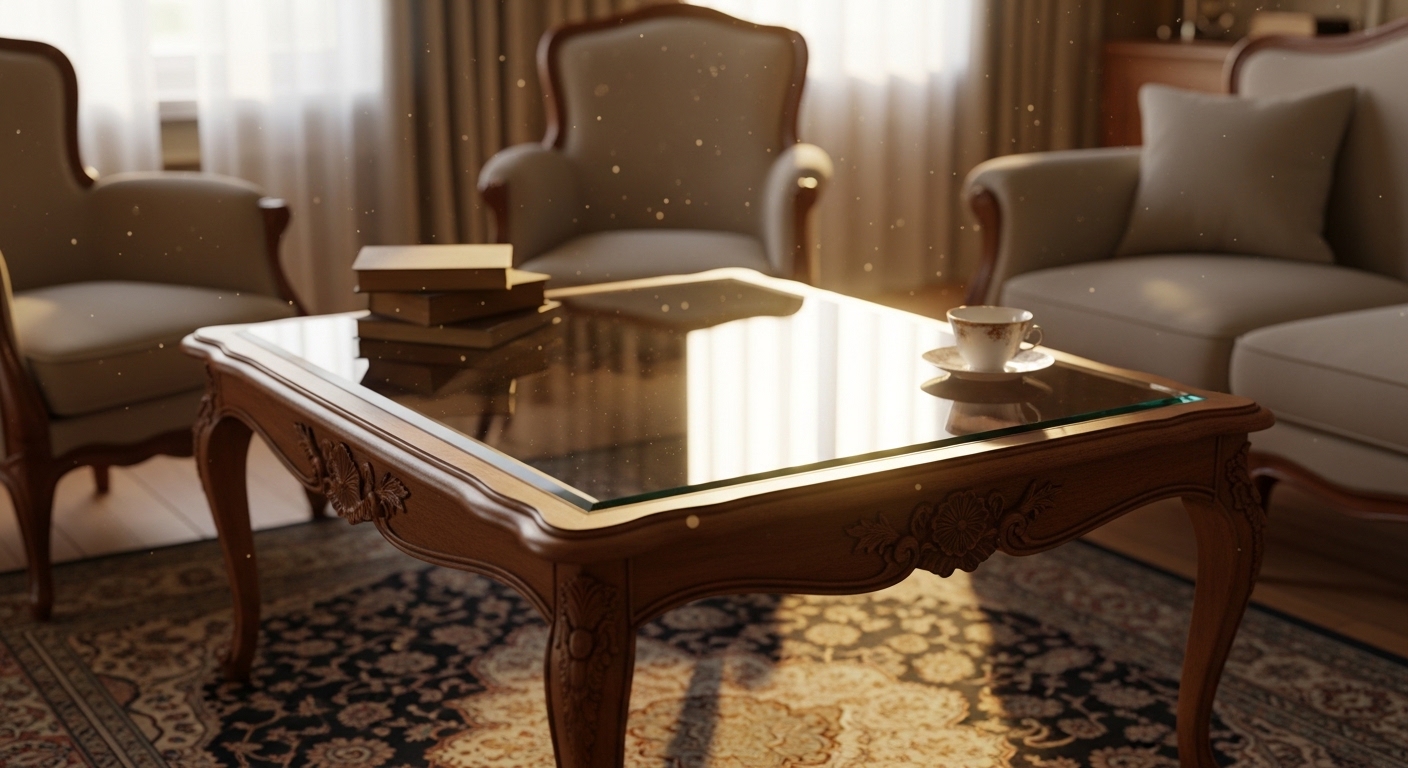
You finally found that beautiful antique dresser at an estate sale. Or maybe your grandmother left you her old oak dining table. Whatever it is, you know it matters. And the last thing you want is a coffee mug ring or a deep scratch ruining it forever. Protecting antique furniture with custom-cut glass tops is one of the smartest and simplest things you can do to keep those pieces safe and still show off their beauty every single day.
Why Antique Furniture Needs Extra Protection
Old furniture is not like new furniture from a store. It has a history. It has character. And honestly, that is exactly what makes it so special. But that same age also makes it more fragile and harder to repair.
Most antique wood furniture has a finish that has been on it for decades. That finish can crack, fade or peel with just a little daily use. One spilled glass of water can leave a white ring that takes hours of work to remove. A child dragging a toy across the surface can leave marks that never fully go away.
What Makes Antique Wood So Easy to Damage
Wood grain on old furniture is often dry and porous. Unlike newer furniture that is sealed with modern coatings, antique pieces absorb moisture and dust quickly. That makes them very easy to stain and scratch.
I remember helping a friend move an old rosewood sideboard a few years ago. We were so careful during the move. But then just two weeks later, a simple glass of iced tea left a ring that took her weeks of careful polishing to fix. The wood was beautiful but completely unprotected. That is when she finally decided to get a custom glass top cut for it. She has not worried about it since.
UV rays from sunlight are also a big problem. They fade and dry out wood over time. If your antique piece sits near a window, sun damage can age it very fast without you even noticing.
How a Glass Top Stops Daily Wear and Tear
A custom-cut glass top sits directly over the surface of your furniture. It acts as a clear shield between the world and your precious wood surface. Spills, scratches, makeup, food, rings from wet glasses and even sun damage cannot reach the wood underneath.
The best part is that you can still see every beautiful detail of the wood finish through the glass. The wood grain stays visible. The carved edges stay visible. Nothing is hidden. You are just adding an invisible layer of safety on top.
Types of Glass You Can Use for Antique Furniture
Not all glass is the same. Picking the right type matters a lot when you are protecting something as special as antique furniture. Let me break it down simply so you can choose without any confusion.
Tempered, Annealed and Laminated Glass Explained
Tempered glass is the most popular choice. It is up to four times stronger than regular glass. And if it ever does break, it breaks into small, rounded pieces instead of sharp shards. That makes it much safer for homes with kids or pets.
Annealed glass is the most common and affordable option. It works well for everyday use on furniture that is not in a high-traffic area. However, it is not great for outdoor furniture because it cannot handle big temperature changes.
Laminated glass is made of two layers of glass with a thin plastic sheet between them. If it breaks, the plastic holds the pieces together. This makes it the safest option of all three. It costs a bit more but is a great choice if safety is your top concern.
Why Low-Iron Glass Is Best for Antiques
Here is something most people do not know. Regular glass has a slight green tint to it. You can see that green color especially on the edges. For most furniture, it does not matter. But for antique furniture, where you want to show off the true color of the wood, that green hue can change how the piece looks.
Low-iron glass has almost no green tint at all. It is nearly invisible when placed on a surface. This makes it perfect for vintage furniture and heirlooms, where the original color and tone of the wood really matters. It costs a little more, but the difference in appearance is worth it.
How to Choose the Right Thickness for Your Table
Glass thickness is one of the most important decisions you will make. Too thin and it can flex or crack under weight. Too thick, and it can look bulky or feel too heavy on a delicate antique piece.
Glass Thickness Guide for Different Furniture Types
Here is a simple guide, according to NGA, to help you choose the right thickness:
A 1/4 inch thick glass top is the most recommended for protective top covers on antiques. It is strong enough for daily use but light enough not to overwhelm the furniture.
3/8 inch glass is a great middle ground. It works well for coffee tables and end tables where people set drinks, books, and remotes regularly.
1/2 inch to 3/4 inch glass is best for dining tables and conference tables where the glass needs to support heavier items and regular use. These thicker tops can even stand alone on a base without needing an existing table top beneath them.
According to the Glass Association of North America, the right glass thickness directly affects both safety and longevity of the piece.
Edge Styles That Make Your Furniture Look Even Better
The edge of your glass top says a lot about the overall look of the piece. A beveled edge is a classic choice. It catches light beautifully and gives the glass an elegant, finished look.
A flat, polished edge is clean and modern. It works well on both traditional and contemporary antique pieces. A pencil edge is thinner and more subtle, perfect if you want the glass to look nearly invisible.
The ogee edge is a more decorative option with a small curved ledge. It is especially nice on formal dining tables or fine accent pieces. The right edge style can make your custom glass top feel like it was always part of the furniture.
How to Measure Your Antique Furniture for a Custom Glass Top
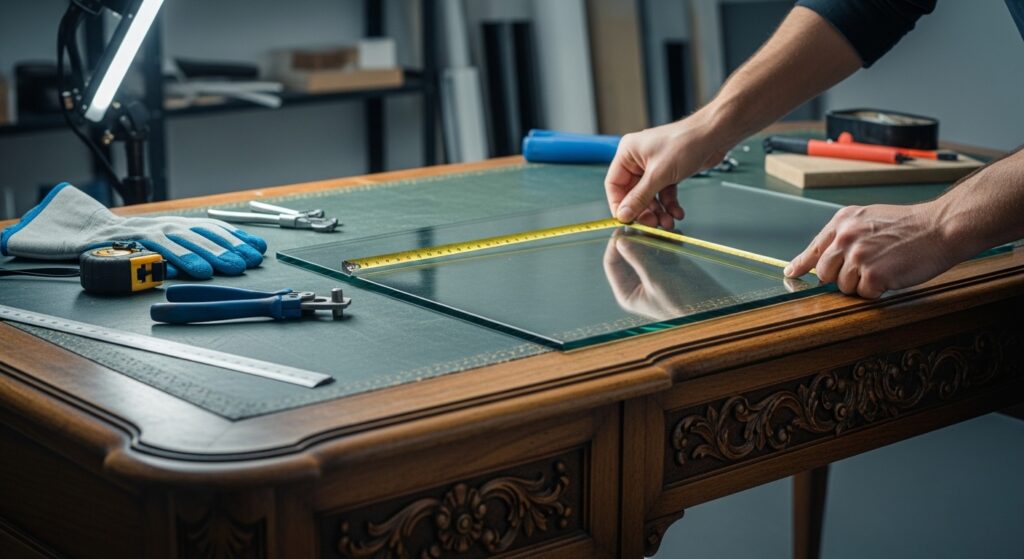
Getting the measurements right is the most important step. A glass top that is even a quarter inch off can look wrong or not sit properly on the furniture.
Step-by-Step Measurement Tips for Odd-Shaped Antiques
Start with a measuring tape. Stretch it straight across from one side to the other side of your furniture. Do this in both directions. Write the numbers down clearly.
For a round table, measure the diameter, which is the straight line from one side to the other through the center. For oval tables, measure the longest length and the widest width.
Antiques are rarely perfectly round or square. Old furniture shifts and warps over time. So always measure in at least two or three spots to catch any difference. If one side measures slightly differently from the other, use the larger measurement for safety.
I had a funny moment once trying to measure an old oval parlor table at my aunt’s house. Every time I measured, I got a slightly different number because the edges had warped with age. Turns out, the table was nearly a quarter inch wider on one side than the other. Getting that laser measurement done saved us from ordering a piece that would have never fit right.
When to Use Laser Measurement for Exact Fit
If your antique furniture has an unusual shape, carved edges, or visible warping, it is worth paying a glass company to come and do a laser measurement on site. This gives you a cut that matches every tiny curve and angle of the original piece.
Laser measurement is especially useful for antiques that are not standard shapes, like circles or rectangles. Some old furniture pieces have unique corners or hand-carved edges that a standard tape measure simply cannot capture well. A precise cut makes the glass look like it was made for the piece, because it was.
How to Place and Secure the Glass Top Safely
Once your custom-cut glass top arrives, placing it correctly is key. A glass top that slides or rattles is annoying and can even be dangerous.
Using Non-Slip Pads and Silicone Spacers the Right Way
Always place non-slip rubber pads or silicone spacers between the glass and the furniture surface. Put them at each corner and along any long edges. These small pads do three important things.
First, they keep the glass from sliding. Second, they protect the wood finish underneath from any pressure or scratching from the glass edge. Third, they allow a small amount of air to flow between the glass and the wood. That airflow helps prevent moisture from getting trapped, which is especially important for old wood.
Clear rubber dots or adhesive discs are a great invisible option if you do not want anything showing from the side. According to a guide by the Furniture Society, proper use of non-slip spacers and pads significantly extends both the life of the glass and the wood underneath.
Cleaning and Maintaining Your Glass Top Every Day
One of the best things about glass is how easy it is to clean. You do not need special cleaners or oils. Just use a microfiber cloth with a little glass cleaner and wipe it down. Done.
For fingerprints or smudges, a simple mix of equal parts white vinegar and water works perfectly. Spray it on, wipe with a lint-free cloth, and you will have a streak-free finish every time. Avoid using rough sponges or anything abrasive that could scratch the surface.
The wood underneath never needs to be touched. No polishing. No oiling. No worrying. The custom glass top handles all the daily exposure, so your antique furniture stays perfect underneath for years to come.
Conclusion
Protecting antique furniture with custom-cut glass tops is one of the simplest ways to keep your most treasured pieces in great shape. You get a barrier that stops scratches, spills, stains, and UV damage while still showing off every detail of the wood underneath. From choosing the right glass thickness to using non-slip spacers and picking the perfect edge style, every step of the process is manageable and worth it. Your heirlooms and vintage furniture deserve that kind of care. I would love to hear how you protect your own antiques. Drop your thoughts below!
Frequently Asked Questions
Can I put a custom glass top on any antique furniture piece?
Yes, almost any flat-surfaced antique furniture can have a custom-cut glass top placed on it. This includes tables, dressers, nightstands, desks, and consoles. As long as the surface is flat and stable, a glass top will fit and protect it well.
What thickness of glass is best for protecting antique furniture?
For most protective top covers on antiques, a 1/4 inch thick glass is the most recommended. It is strong enough to handle daily use and light enough not to damage or stress the old furniture beneath it.
Will the glass top hide the beauty of my antique wood?
Not at all. Custom-cut glass tops are clear and allow you to see every detail of the wood grain and finish underneath. If you want zero color distortion, choose low-iron glass, which is nearly invisible and shows the true color of the wood.
How do I stop my glass top from sliding on the furniture?
Always use non-slip rubber pads or silicone spacers at each corner and along the edges. These hold the glass firmly in place, protect the wood finish underneath, and allow air to flow so moisture does not get trapped between the glass and the wood.
Is tempered glass safe to use on antique furniture at home?
Yes. Tempered glass is up to four times stronger than standard glass and much safer in the home. If it does break, it breaks into small, rounded pieces rather than sharp shards. It is a great choice for homes with children, pets, or high daily use.