
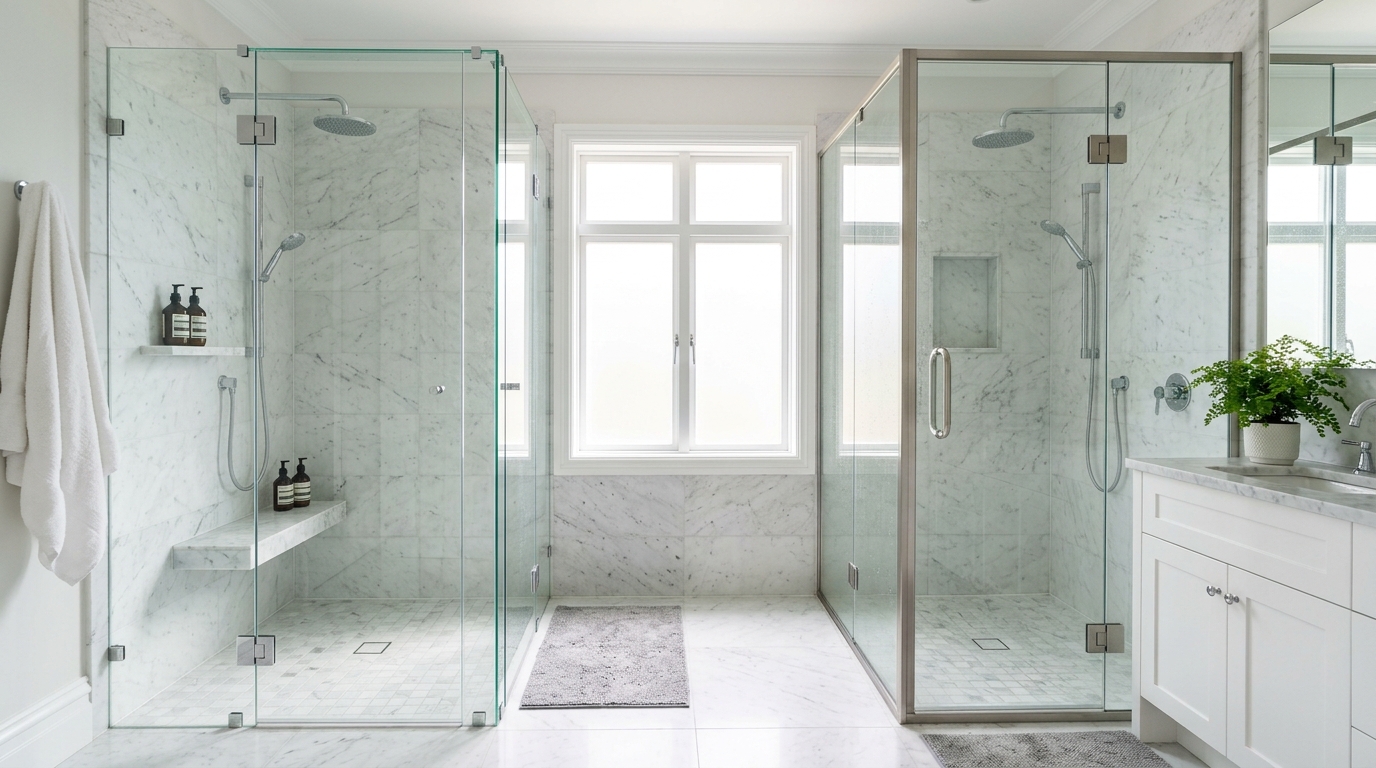
Picking a shower door for your home feels like a big decision. You stand there in the store or scroll online, looking at pictures, and everything looks nice. But here’s the thing, not all shower doors work the same way. Some have metal frames all around, some have just a little bit of framing, and some don’t have any at all. If you’re like me, a few years back, you might have wondered what the real difference is between frameless and semi-frameless shower doors.
What Makes Frameless Shower Doors Different from Semi-Frameless?
When I first heard about frameless shower doors, I thought they might break easily. I mean, no frame? How does that even hold together? But then I learned something interesting. Frameless doors use really thick glass, usually 3/8 inch or even 1/2 inch thick. That heavy glass stays strong without needing a metal frame around it. Instead, it’s held up by small hinges and clips that attach right to the wall or the glass itself.
Now, semi-frameless doors are a bit different. They have some metal framing, but not everywhere. Usually, you’ll see a frame around the fixed glass panels or maybe just at the bottom. The door part might be frameless, which gives it a cleaner look. Because they have that extra support from the frame, they can use thinner glass, around 1/4 inch. That makes them lighter and sometimes easier to work with.
How Thick Is the Glass in Each Type?
Glass thickness matters more than you might think. With frameless doors, the glass has to be thick enough to stand on its own. That’s why you’ll always see 3/8 inch or 1/2 inch tempered glass on these. It’s sturdy, safe, and won’t wobble when you open or close the door. According to the Safety Glazing Certification Council, tempered glass used in shower enclosures must meet specific safety standards to protect users from injury. Semi-frameless doors don’t need glass that thick. The metal frame does some of the work, so the glass can be thinner, often 1/4 inch or 3/16 inch. This makes them a bit less heavy. If you’re putting it in an older home where the walls might not be super strong, a semi-frameless door could be easier to install without worrying about the wall holding all that weight.
The Hardware: Small Parts That Make a Big Difference
I once visited a friend’s new bathroom, and the first thing I noticed was how clean and simple the shower looked. No bulky metal anywhere, just clear glass and tiny hardware pieces. That’s the beauty of frameless doors. They use minimal hardware like small clamps, brackets, and hinges. Everything is designed to stay out of sight as much as possible. The focus is on the glass itself, not the metal.
Semi-frameless doors, on the other hand, have more visible metal framing. You’ll see aluminum or sometimes stainless steel around the edges. This isn’t a bad thing; it just gives a different look. The frame adds support and helps with sealing, which can keep water from leaking out. Some people actually prefer this style because it feels more secure and traditional.
Installation: Which One Is Easier to Set Up?
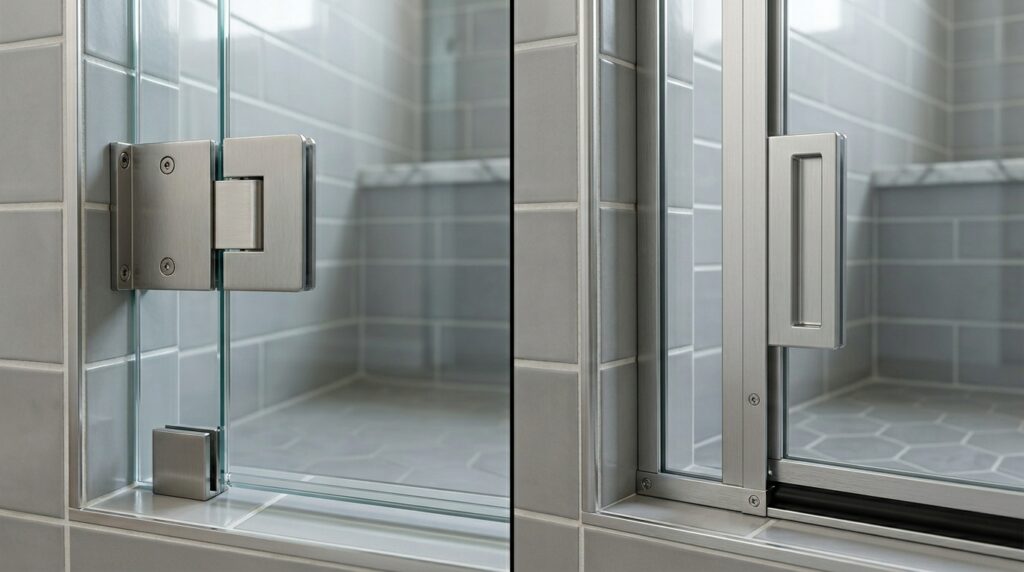
Let me tell you, I’m not a professional installer. But I’ve watched enough videos and read enough guides to know that frameless doors are tricky to install. Because there’s no frame holding everything together, every measurement has to be perfect. The walls need to be straight, the hinges need to be placed exactly right, and the sealing has to be spot-on. If you mess up even a little bit, you might get water leaking out onto the floor.
That’s why most experts say you should hire a professional to install frameless doors. They have the tools and experience to get it right the first time. Semi-frameless doors are a bit more forgiving. The frame gives you a little room for mistakes, and the pieces fit together more easily. Some handy people can even install them on their own, though I’d still recommend getting help if you’re not confident.
Sealing and Water Leaks: What You Need to Know
Nobody wants water all over the bathroom floor. I learned this the hard way once when an old shower curtain didn’t do its job, and I had to mop up a puddle every morning. With frameless doors, the sealing is super important. Because there’s no frame, you rely on silicone sealant and the precision of the installation to keep water inside. If it’s not done right, you can get small leaks.
Semi-frameless doors have an advantage here. The metal frame creates a tighter seal around the edges. There’s less chance of water sneaking out, especially at the bottom where the frame sits. This makes them a good choice if you have a small bathroom and can’t afford to have water splashing everywhere.
The Look and Feel: Modern vs. Traditional
I’ll be honest, I love the way frameless doors look. They make a bathroom feel bigger and more open. There’s nothing blocking your view, so you can see all the nice tile work and the whole shower enclosure without any metal getting in the way. It’s a very modern, clean style that works great in new homes or if you’re going for that spa-like feel.
Semi-frameless doors have a bit more structure to them. You can see the metal, which some people like because it feels more grounded and less fragile. If your bathroom has a more traditional style, or if you like a bit of contrast between the glass and the hardware, then semi-frameless might be the better fit for you.
Cleaning and Maintenance: What’s Easier to Keep Clean?
Cleaning is one of those things nobody talks about enough when you’re buying a shower door. Frameless doors are actually pretty easy to clean because there’s no frame where soap scum and grime can build up. You just wipe down the glass, and you’re done. Sure, you still have to clean the hinges and clips, but there aren’t many of them, so it doesn’t take long.
Semi-frameless doors have more parts to clean. The metal frame can collect water spots, soap, and other stuff over time. You’ll need to scrub the corners and edges more often to keep it looking good. It’s not a huge deal, but it’s something to think about if you’re someone who likes low-maintenance things.
Cost: Which One Is More Affordable?
I won’t sugarcoat it: frameless doors are expensive. The thick glass costs more, the hardware is specially made, and you’ll probably have to pay for professional installation. All of that adds up. If you’re on a tight budget, it might be hard to justify the extra cost, even though they look amazing.
Semi-frameless doors are usually cheaper. The glass is thinner, the metal framing isn’t as expensive as premium stainless steel or brass, and the installation is often simpler. You can get a nice, modern look without spending as much money. For a lot of people, that balance between cost and style makes semi-frameless the smarter choice.
Durability: How Long Will They Last?
Both types of doors are built to last, but they’re built differently. Frameless doors rely on the strength of the glass. As long as the glass is tempered and the installation is done right, these doors can last for many years without any issues. The lack of metal means there’s nothing to rust or corrode over time.
Semi-frameless doors have the added durability of the metal frame. Aluminum frames are lightweight and don’t rust easily. If the frame is made of stainless steel or plated brass, it can last even longer. The downside is that over time, the frame might show wear and tear, especially in the corners or where water sits. But with proper care, these doors can also last a long time.
Which One Should You Choose?
This is where it gets personal. If you want a sleek, modern bathroom and you have the budget for it, go with frameless. You’ll get that clean, open look and a shower that feels like it belongs in a high-end hotel. Just make sure you hire a good installer and take care of the sealing.
If you’re working with a smaller budget or if you just prefer a bit more structure and don’t mind cleaning the frame, then semi-frameless is a great option. You still get a nice, modern appearance, but with a little more support and usually a lower price tag. Plus, it’s a bit easier to install and less likely to leak if something goes wrong.
If you’re still unsure about which shower door is right for you, don’t worry—there are experts who can help you figure it out. Check out Hansen Glass for more tips and ideas on choosing the perfect shower design for your home.
Conclusion
Choosing between frameless and semi-frameless shower doors comes down to what you value most. Do you want a super clean, modern look with no visible framing? Or do you prefer something with a bit more structure, easier installation, and a lower cost? Both types have their strengths, and both can make your bathroom look great. Think about your budget, your style, and how much time you want to spend on cleaning and maintenance. Once you know what matters most to you, the choice becomes a lot easier.
Frequently Asked Questions
Can frameless shower doors leak?
Yes, they can leak if they’re not installed properly. The sealing is very important. If the silicone isn’t applied correctly or if the walls aren’t straight, water can escape. That’s why professional installation is usually recommended.
Are semi-frameless doors easier to install than frameless doors?
Yes, they usually are. The metal frame provides more support and makes it easier to get everything lined up. Some people even install them on their own, though it’s still a good idea to get professional help if you’re not sure.
Which type of shower door is cheaper?
Semi-frameless doors are usually cheaper. They use thinner glass and less expensive hardware. Frameless doors cost more because of the thick glass and the precision required for installation.
Do frameless doors make a bathroom look bigger?
Yes, they do. Because there’s no metal frame blocking your view, the space feels more open. This is especially helpful in smaller bathrooms where you want to avoid anything that makes the room feel cramped.
How thick is the glass on a frameless shower door?
Frameless shower doors usually use glass that’s 3/8 inch or 1/2 inch thick. This thickness is needed to make the door strong and stable without a frame holding it up.