
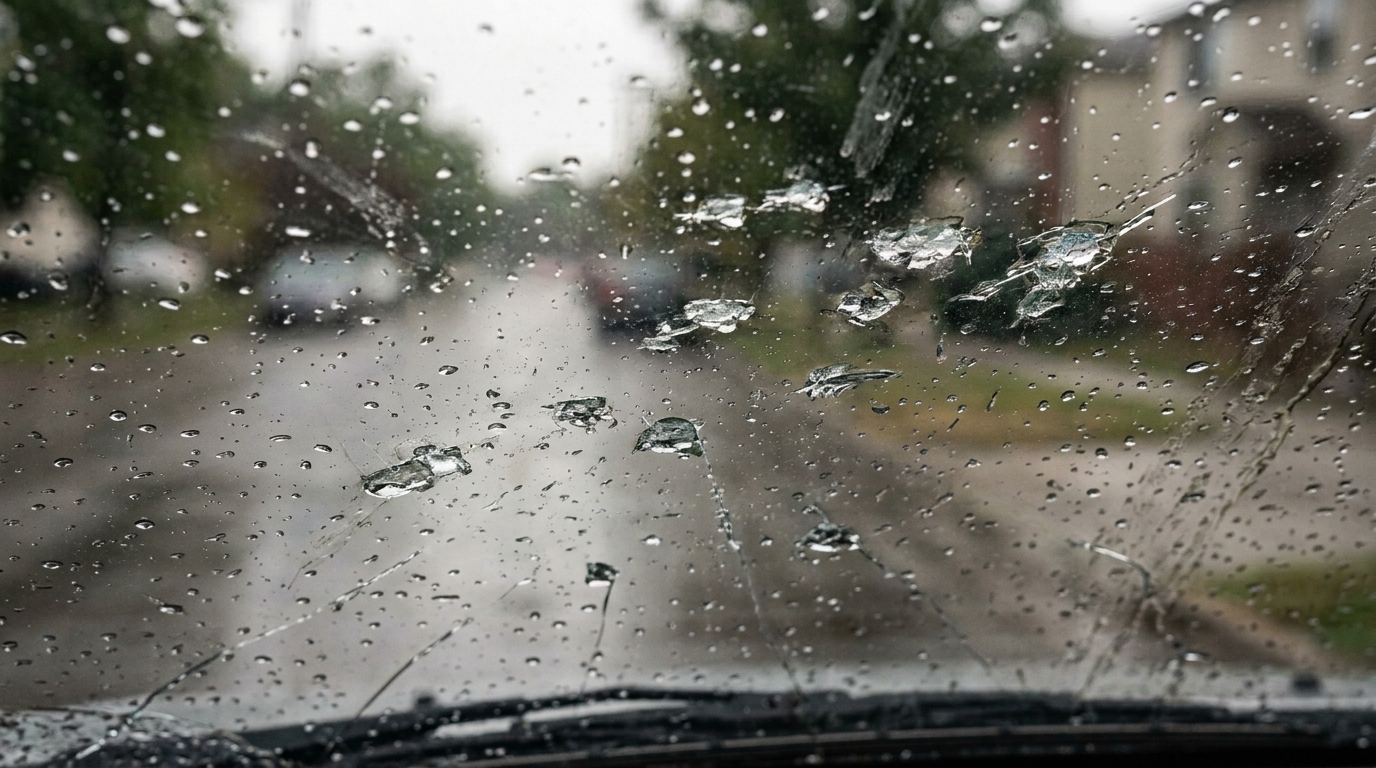
A hailstorm can be over in ten minutes and leave damage that costs you thousands. Most people spot the dents on the hood and think that’s the worst of it. But the glass? That’s where the real danger hides. A proper hail damage assessment can reveal cracks, failed seals and compromised glass integrity that are invisible to the naked eye but dangerous every single day you ignore them.
Why Hail Is More Dangerous Than You Think
Hail looks simple. It’s just frozen water. But when a hailstone hits your windshield or home window at speed, it carries real force. A hailstone just one inch across can hit with enough energy to crack glass or damage the seals around it.
The problem is that not all damage shows up right away. A tiny chip today can grow into a long crack tomorrow. Road vibrations, temperature changes and wind pressure while driving all make that small impact point get worse fast.
Most people don’t realize how serious even minor hail damage can be. I once ignored a small star-shaped chip on my windshield after a summer storm in Colorado. Within two weeks of driving in the heat, that chip turned into a crack running halfway across the glass. It cost me a full windshield replacement instead of a simple fifty-dollar fix. That taught me to never wait.
How Hailstones Actually Break Glass
Hailstones form inside thunderstorms when strong updrafts carry water droplets high into the freezing atmosphere. There, they become balls of ice and fall down with speed and force. According to the NOAA National Severe Storms Laboratory, hail causes billions of dollars in damage to structures and vehicles across the US every year.
Larger hailstones, especially those over one inch in diameter, can strike auto glass hard enough to leave chips, deep impact points and even stress fractures. These fractures spread through the glass slowly but surely.
Safety glass on cars is made to resist breaking apart. It’s built to stay in one piece even when cracked. But once the inside structure is damaged, that glass is no longer giving you full protection in a collision. That’s the part most people miss.
Signs That Your Glass Integrity Has Been Compromised
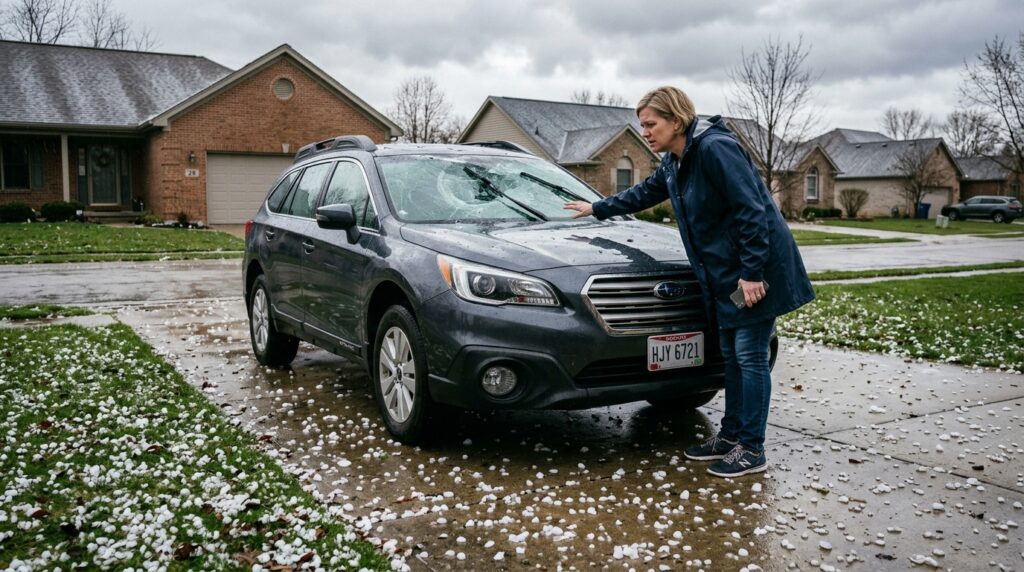
Visible Damage: Chips, Cracks, and Star-Shaped Impact Points
After a hailstorm, check all your glass in good natural light. Walk around your car slowly and look at every pane from different angles.
Look for chips, which are small spots where glass has broken away from the surface. Look for cracks running in lines across the glass. And look for star-shaped impact points, which are circular patterns spreading out from where a hailstone hit directly. These are the most common signs of hail impact on auto glass and home windows.
Even tiny chips matter. Once the outer layer of laminated glass or tempered glass is broken, the whole pane becomes weaker. That chip is a starting point for a much larger crack.
Check the edges of your windshield too. Cracks that start at the edges spread the fastest. The edges carry the most stress in any glass pane and are the first place to fail after damage.
Hidden Damage: Seal Failures and Foggy Panes
This is what catches most people completely off guard. Not all glass integrity damage is visible on the surface. Some of the worst damage is inside the glass or in the seals around it.
If you have double-pane windows at home, hail can break the insulating seal between the two layers. When that seal fails, you will start to see condensation or fog trapped between the panes. That fogging is a clear sign the window seal has been compromised.
For car windows, watch for water getting inside after rain. That can mean the weatherstrip around the glass has been loosened by hail force. Even small gaps let moisture in and cause damage to your car’s interior over time.
I helped a neighbor check his home windows after a spring hailstorm once. Everything looked perfectly fine from outside. But when we checked the double-pane windows from inside, three of them had foggy trapped moisture between the layers. The seal failure was totally invisible from the street until we knew what to look for.
How to Do a Proper Hail Damage Assessment on Auto Glass
Step-by-Step Guide to Inspecting Your Windshield
You don’t have to be an expert to do a basic hail damage assessment on your own. Here is a simple way to check your glass right after a storm.
Park your car in a shaded spot first. Direct sunlight can actually hide some cracks by washing them out with glare. Morning light with the sun at a low angle works best for this kind of check.
Run your fingers gently across the glass surface. Chips and impact points often have a rough texture that your fingertips can find before your eyes do.
Use a flashlight and shine it across the glass at a low side angle. This trick makes small stress fractures and hairline cracks show up clearly against the light. Professional inspectors use specialized lighting tools for exactly this reason.
Check every corner and edge of each glass pane. These spots are the most likely to crack first after a hail impact. Also check the area around the rearview mirror mount on the windshield. That mount point is a known weak spot.
Finally check the rubber seals and weatherstripping all the way around each piece of glass. Press gently to feel if they are loose or if hail has knocked them out of position.
When Should You Call a Professional Inspector?
A DIY check is a good starting point but it has real limits. If you find any chip larger than a coin, any crack longer than a few inches, or if you simply are not sure what you are looking at, call a professional.
Certified glass damage inspectors use UV lights and specialized tools to find hairline cracks that are invisible to the naked eye. They also know how to test whether the structural bond between the glass and the vehicle frame has been weakened by the storm.
If you are planning to file an insurance claim, a professional inspection report is essential. Insurance companies need documented proof with photos and measurements. A certified inspector’s report will support your claim far better than just your own description of the damage.
Repair vs Replacement: What Does Your Glass Actually Need?
Small Chips and Minor Cracks: Can They Be Fixed?
Not all glass damage from hail means full replacement. In many cases, small chips and short cracks can be fixed through a process called resin injection. A technician injects a specially formulated resin into the chip or crack. When it cures, it bonds with the glass and restores most of its strength and clarity.
This repair works well when the chip is smaller than a quarter and the crack is shorter than three inches. It works best when the damage has not reached the edge of the glass and is not directly in the driver’s line of sight.
Resin repairs are quick, usually done in under an hour, and they cost far less than a full windshield replacement. Catching the damage early gives you this option. Wait too long and that option goes away.
Severe Damage and Safety Risks: When Replacement Is the Only Option
Some damage simply cannot be fixed with a repair. If the crack is long, if it runs to the edge of the glass, if it sits directly in the driver’s line of vision, or if the glass has multiple impact points, replacement is the right call.
Driving with severely damaged glass is a real safety risk. Your windshield contributes significantly to your car’s structural strength in a roof crush accident. Once that glass is compromised, it cannot do its job in a crash the way it was designed to.
Tempered glass inside and rear windows cannot be repaired the same way as laminated glass. When tempered glass is too damaged, it needs full replacement.
According to the Insurance Information Institute, hail damage is among the most common reasons for comprehensive auto insurance claims across the US. Getting your glass properly assessed and replaced when needed protects both your safety and the value of your vehicle.
What Happens If You Ignore Compromised Glass?
Structural Integrity Risks After a Hailstorm
Leaving compromised glass in place is a gamble that rarely pays off. A small chip ignored today can become a full crack after one cold morning. Glass expands and contracts with temperature changes. That small damaged spot gets pulled and pushed every single day until it gives.
For home windows, ignored seal failure leads to fogging between panes, cold drafts and higher heating and cooling bills. Your HVAC system has to work harder because the window is no longer insulating properly. What started as a small hail hit quietly raises your energy costs month after month.
For car windshields, a crack running through your line of sight is genuinely dangerous in bright sunlight or driving rain. Light bends around a crack and creates subtle blind spots. Small problems become serious safety issues very fast on the road.
Insurance Claims and Documentation After Hail Damage
If you plan to file a comprehensive insurance claim after a hailstorm, act fast and document everything clearly. Most comprehensive policies cover hail damage to auto glass but you need solid proof to get a fair settlement.
Take clear photos of every chip, crack and impact point as soon as you find them. Write down the date and time of the storm. Save any weather alerts or news reports about the storm in your area. All of this builds a strong case.
According to real-world claims data shared by the Insurance Information Institute, good documentation makes a significant difference in settlement outcomes. A vehicle owner with 47 documented dents and a certified inspector report received more than double the payout of another owner with similar damage but poor paperwork.
Get your professional damage assessment completed before repairs begin. That inspector’s report is your strongest tool when working with your insurance adjuster. Without it, you leave money on the table and have no solid record of what the storm actually did to your glass.
Conclusion
Hail damage assessment is not something to put off for later. When glass integrity is compromised, the problem grows quietly and gets worse with every passing day. What starts as a small chip can become a cracked windshield, a failed seal or a flooded car interior before you know it.
Check your glass after every major storm. Look for visible chips and cracks. Check for foggy double-pane windows and loose weatherstripping. And when you are not sure what you are seeing, call a certified professional. That one call can save you from a far bigger bill later.
Catching the problem early gives you options. You can repair instead of replace. You can file a strong insurance claim backed by solid documentation. And most importantly, you can keep yourself and your family safe on the road and in your home.
If a hailstorm has passed through your area recently, don’t wait. Go check your glass today. A few minutes of attention right now can save you hundreds of dollars and a whole lot of stress later. I’d love to hear what you find or if you have questions about what you’re seeing. Drop a comment below.
Frequently Asked Questions
What is a hail damage assessment for glass?
A hail damage assessment is a careful inspection of your glass, whether a car windshield, auto windows or home windows, to find chips, cracks, seal failures and hidden damage caused by hailstones. It helps you decide whether your glass needs a simple repair or a full replacement to stay safe.
How can I tell if my windshield’s glass integrity has been compromised by hail?
Look for star-shaped impact points, chips or cracks anywhere across the glass and especially at the edges. Shine a flashlight across the glass at a low angle to spot hairline cracks you might miss in normal light. If you see fogging inside a double-pane glass, that means the insulating seal has already failed.
Can I drive with a cracked windshield after hail damage?
It depends on the size and location of the crack. A very small crack away from your direct line of sight may be okay for a short time but should still be fixed soon. A crack in your line of sight or one running to the edge of the windshield is a real safety risk. You should not drive until it is repaired or replaced because it can shatter unexpectedly.
Does car insurance cover hail damage to auto glass?
Yes, in most cases comprehensive coverage covers hail damage to your auto glass after you pay your deductible. Basic liability coverage does not cover hail damage to your own vehicle. Check your policy details carefully or call your insurer to confirm what is included before you start any repairs.
How much does it cost to fix hail-damaged glass?
A simple chip repair using resin injection can cost between $50 and $150. A full windshield replacement typically runs from $200 to over $500 depending on the vehicle and glass type. Side windows with heated elements or sensors can cost more. Acting fast and going through your insurance with solid documentation can reduce your out-of-pocket cost significantly.
SEO Title: Hail Damage Assessment: When Glass Integrity is Compromised
Meta Description: After a hailstorm, your glass may look fine but still be at risk. Learn how a proper hail damage assessment reveals when glass integrity is compromised and what to do next.