
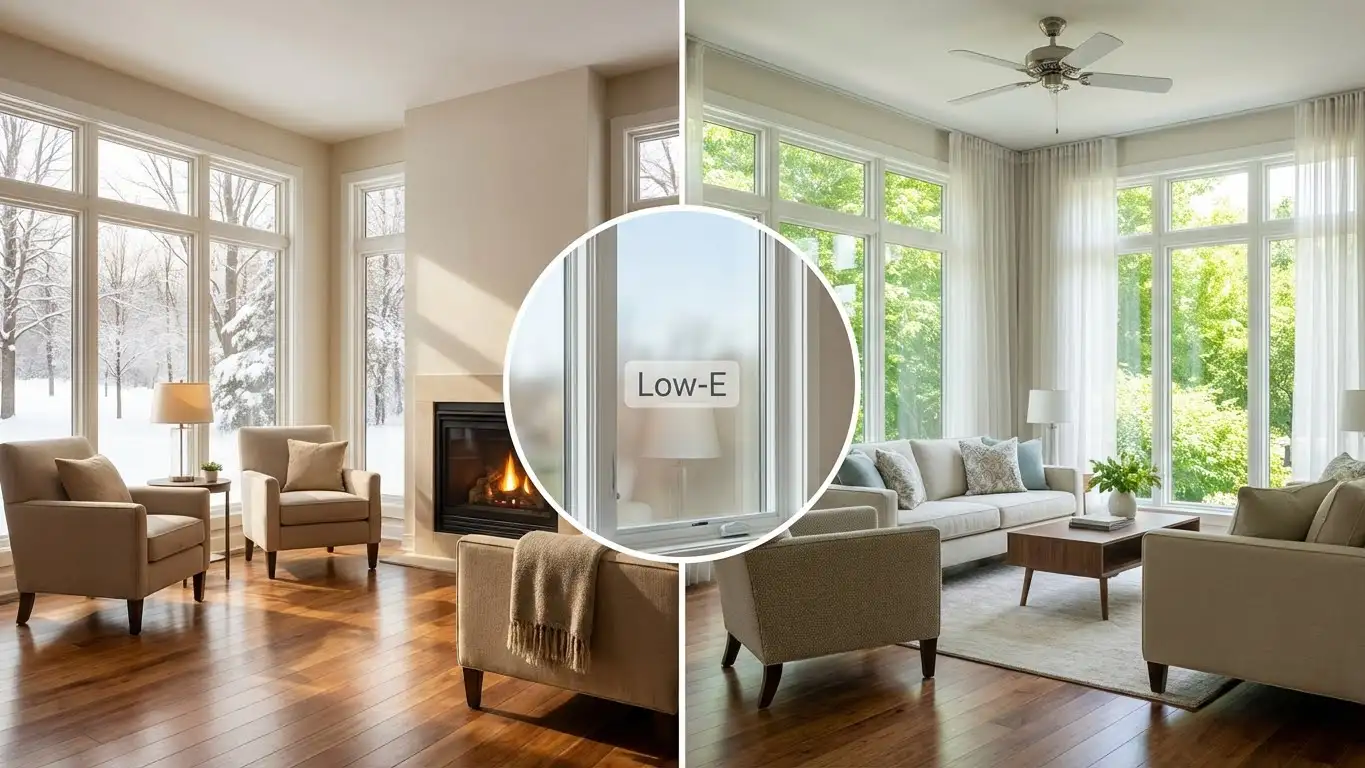
If your home feels too hot in the summer and too cold in the winter, your windows might be to blame. A lot of people don’t realize how much heat or cold escapes through old, basic glass. That’s where something called Low-E double-pane glass can help. It’s a smart way to make your home more comfortable and even cut your energy bills.
Low-E double-pane glass means two layers of glass with a sealed space in between, and a special invisible coating that helps reflect heat. It keeps the inside warmer in winter and cooler in summer without making your home dark.
What Is Low‑E Glass, in Simple Terms?
Low‑E glass is regular glass with a very thin, invisible coating on it. This coating helps block heat from moving in or out of your home. It still lets in plenty of light, but it cuts down the extra heat that usually slips through windows.
When I first learned about Low‑E glass, I was helping a friend fix up an older home. The rooms felt warm, but the moment we stood near the windows, a cold draft hit us. After replacing just one window with Low‑E double‑pane glass, the change was so clear that we joked it felt like someone had “turned off the outside.” That’s when I realized how much heat regular glass wastes without us noticing.
Low‑E coatings work by reflecting heat back to where you want it. In cooler months, they help keep indoor warmth. In warmer months, they help keep the outdoor heat outside. You don’t see the coating, but you feel the difference in comfort and energy use right away.
How Double-Pane Windows Work with Low-E Glass
The Basics of Double-Pane Windows
Double-pane windows are made of two layers of glass with a sealed space between them. That space is often filled with air or a special gas like argon. Why? Because gases like argon don’t move heat easily. So, when outdoor heat or cold tries to get through, that middle layer slows it down.
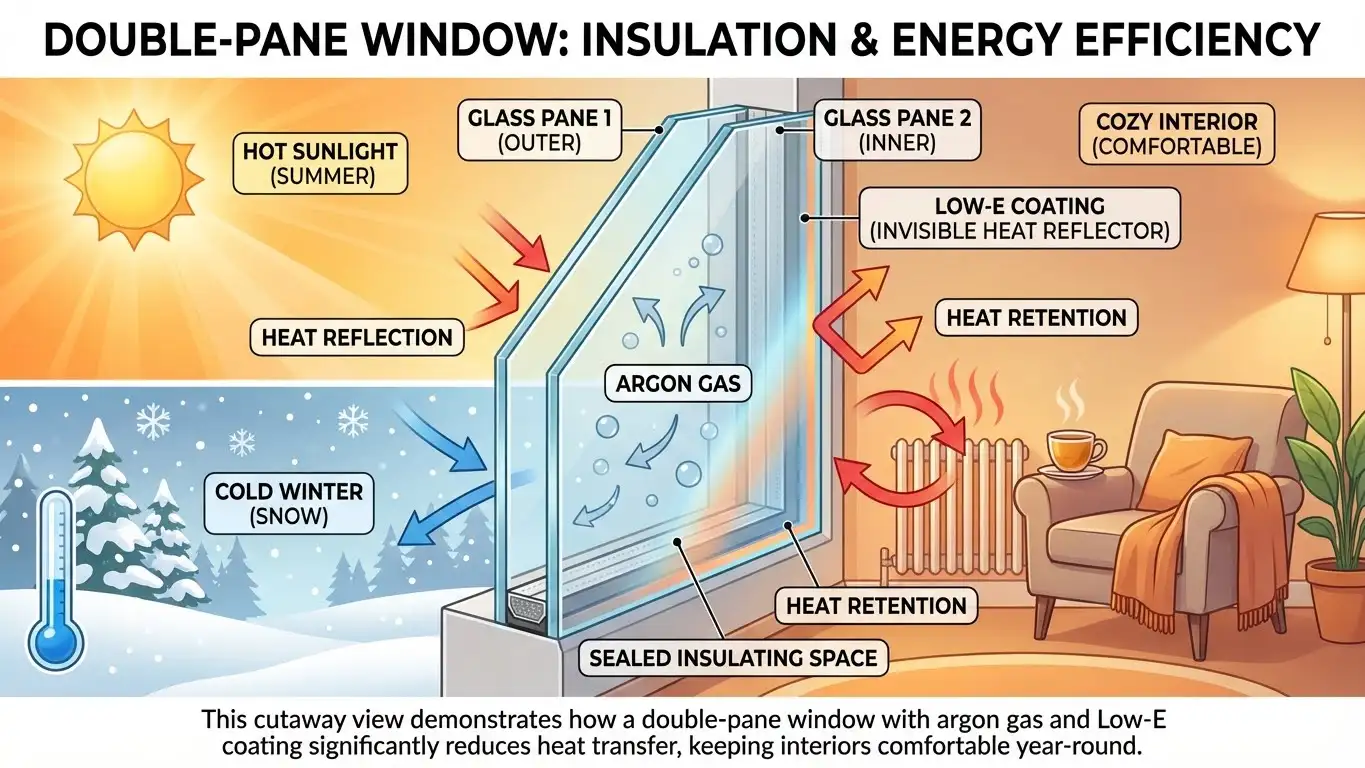
This means your home stays warmer in the winter and cooler in the summer. It’s like putting a jacket on your house. But the glass itself still lets some heat and cold pass through, and that’s where Low-E glass comes in.
What Low-E Adds to the Equation
Low-E stands for “low emissivity.” That’s a fancy way of saying the glass doesn’t give off or let in much heat. Low-E glass has a super-thin, clear coating made from metal, usually silver or a mix of metal oxides. You can’t see it, but it’s working all the time.
When you combine Low-E glass with a double-pane window, you get a powerful combo. The space between the panes slows down temperature changes, and the Low-E layer reflects unwanted heat. In the winter, it bounces your indoor heat back inside. In the summer, it reflects the outside heat away from your home. And because it still lets in natural light, your space stays bright without getting too hot.
How They Work Together
Think of regular double-pane windows as a warm coat. Now, imagine adding a thermal layer inside that coat — that’s what Low-E does. It turns an already good window into a high-performance energy-saving tool. Without Low-E, some heat still sneaks through the glass. But with it, the amount drops a lot. Your heating and cooling systems don’t have to work as hard, so your energy bills go down.
Another bonus is how it affects sunlight. Low-E coatings can block a good chunk of the sun’s UV rays, which helps stop your furniture, floors, and curtains from fading. And it does this without making your windows look tinted or dark.
What You’ll Notice at Home
Once these windows are installed, the results are easy to feel. Your rooms don’t get as drafty. The sun doesn’t make certain spots too hot. It’s just more even and comfortable. If you’ve ever had to close the blinds mid-day to keep the room cool, Low-E glass can help stop that.
The glass also helps cut noise from outside, not because of the Low-E layer, but because of the double-pane build. So your home feels quieter, too. And since you’re using less heating and cooling, you’re also lowering your carbon footprint. That’s a small way to help the planet while making your home better.
Why Low-E Windows Are a Smart Choice for Colorado Homes
Built for Changing Weather
In places where summers are hot and winters are freezing, like many parts of Colorado, window performance really matters. Regular glass just doesn’t cut it. Low-E windows handle both extremes by keeping heat where it belongs — outside in summer and inside in winter.
That means no more roasting near the couch in July or freezing by the window in January. Your rooms stay comfortable all year long without blasting the heater or air conditioner.
Real Benefits Homeowners Notice
Here’s what people love most about switching to Low-E double-pane windows:
- Lower Energy Bills – They help cut down on how much heating and cooling you need.
- More Comfortable Rooms – No more hot or cold spots near windows.
- Less Fading – They block UV rays that fade your rugs, furniture, and photos.
- Natural Light Without the Heat – They let in plenty of daylight without turning rooms into ovens.
- Quieter Indoors – Double panes help block outside noise.
- Better for the Planet – Using less energy also reduces your carbon footprint.
Side-by-Side Comparison
Here’s a quick look at how Low-E double-pane windows compare to regular windows:
| Feature | Regular Single-Pane Glass | Double-Pane with Low-E |
| Insulation | Poor | Excellent |
| Blocks UV Rays | Minimal | Yes (reduces fading) |
| Keeps Heat Inside (Winter) | No | Yes |
| Blocks Solar Heat (Summer) | No | Yes |
| Energy Efficiency | Low | High |
| Indoor Comfort | Inconsistent | Stable year-round |
| Sound Control | Little | Good |
| Cost Savings Over Time | None | Yes |
Low-E windows don’t just sound good, they really work. The technology may be hidden in the glass, but you’ll feel the difference every single day.
Real Benefits You’ll Notice Inside Your Home
Feel the Difference in Every Room
When you upgrade to Low-E double-pane glass, the changes aren’t just numbers on your energy bill, you can actually feel them. The air stops feeling too dry or too hot near the windows. The floors don’t freeze your feet in the morning. Even the glare on your TV screen gets better. It’s the kind of comfort you might not expect from “just new windows.”
Everyday Comfort Boosts
Here are some simple ways these windows make daily life easier:
- Even Temperature – No more hot spots in the summer or cold spots in the winter. Your home stays steady and cozy.
- Quieter Spaces – The double panes help cut outside noise like traffic, barking dogs, or loud neighbors.
- Fewer Drafts – You won’t feel that chilly breeze coming from old windows anymore.
- Better Sleep – Bedrooms stay cooler at night in summer and warmer in winter, which helps you sleep more comfortably.
- Less Need for Blinds – Since Low-E glass blocks out excess heat and UV rays, you can leave the curtains open without roasting the room.
Protects What Matters Inside
It’s not just your comfort; your stuff gets protection, too:
- Stops Fading – Low-E coatings help block the UV rays that fade wooden floors, sofas, carpets, and even your wall art.
- Saves Electronics – Excess heat can damage screens, laptops, or devices left near sunny windows. Low-E glass keeps temperatures stable.
Real-Life Story: What Homeowners Say
Some folks notice it on day one. A family I worked with said their living room always got so hot around 3 PM that they couldn’t sit in it. After installing Low-E double-pane windows, they told me, “It finally feels like part of the house again, we can use the space all day. That’s what these windows really give you: more comfort, more space, and more reasons to relax at home.
Does It Really Save You Money on Bills?
How Low-E Glass Helps Cut Costs
Yes, Low-E double-pane glass can save you real money, and not just a few cents. By blocking heat loss in the winter and keeping heat out in the summer, your heating and cooling systems don’t need to work as hard. That means they run less often and use less power, which shows up on your energy bill pretty quickly.
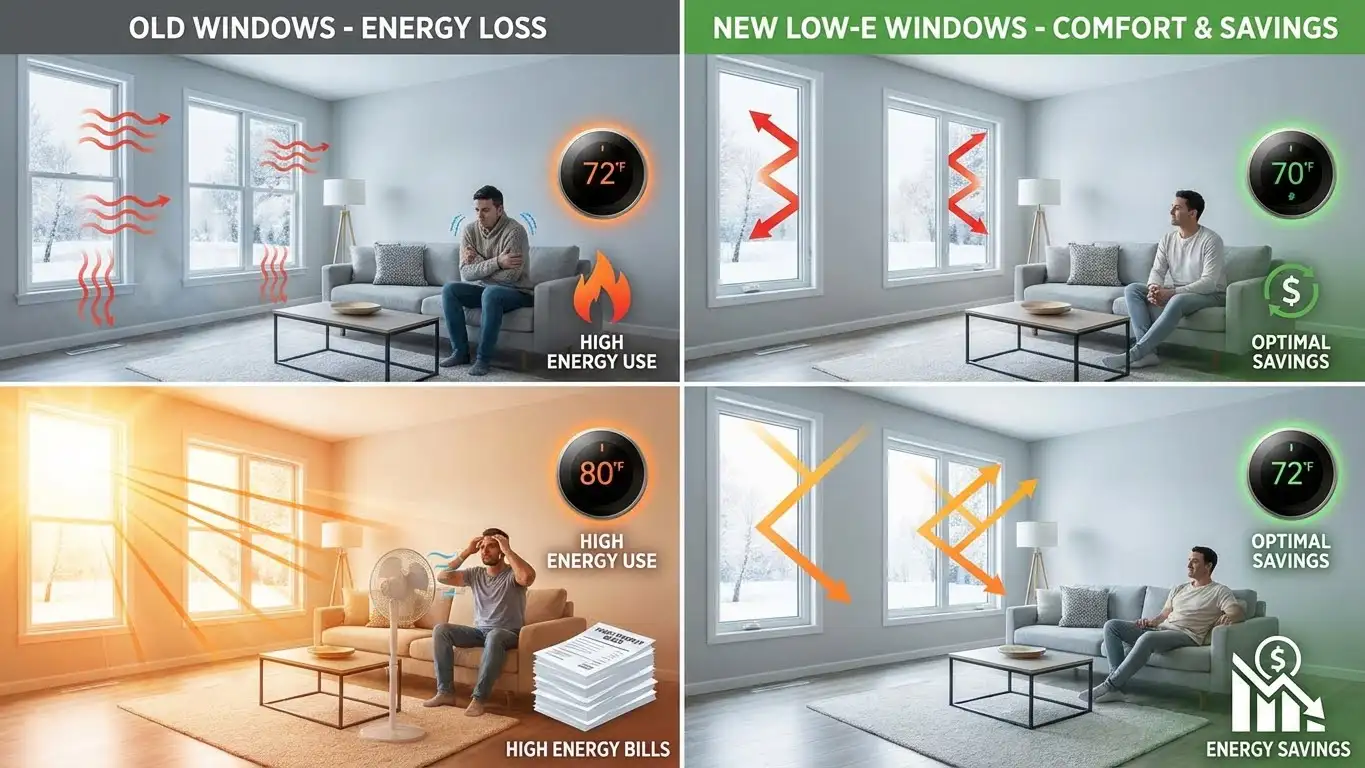
Most homes lose a lot of energy through old or single-pane windows. When those windows are replaced with Low-E double-pane glass, some people see up to 30% savings on their yearly heating and cooling costs.
That depends on the size of the house, the age of the old windows, and how hot or cold the climate gets, but even smaller homes usually notice a drop in monthly bills. According to the U.S. Department of Energy, heat gain and loss through windows are responsible for 25%–30% of residential heating and cooling energy use.
Day-to-Day Savings You Can See
Imagine not having to blast the AC on a hot day just to keep the room livable. Or not needing to keep the heat running non-stop in the winter. That’s where the real savings add up: fewer hours of heating and cooling, lower wear and tear on your systems, and a more stable indoor temperature.
Even on milder days, Low-E glass helps balance the inside air, so you’re not constantly adjusting the thermostat. The savings might not be dramatic overnight, but over the course of a year or two, they become clear, especially when compared to homes with older, less efficient windows.
More Than Just Energy Bills
Saving money on electricity and gas is just part of the value. These windows also help preserve your furniture and flooring by blocking UV rays, so you don’t have to replace faded items as often. Plus, because your heating and cooling systems aren’t working overtime, they may last longer, and that avoids costly repairs or replacements down the line.
Low-E double-pane glass is one of those upgrades that pays off in small ways every day. It’s not flashy, but it works behind the scenes to save money, boost comfort, and protect your home’s interior. And over time, those small wins turn into long-term value.
Final Thoughts
Upgrading to Low-E double-pane glass is a smart move if you want better comfort, lower bills, and less fading in your home. It’s one of those quiet changes that works nonstop behind the scenes — making each room feel just right, no matter the season. If you’re thinking about new windows, this option gives you long-term value without sacrificing natural light or style.
Ready to Make Your Home More Comfortable?
If you’re thinking about upgrading your windows, now’s a great time to start. At Hansen Glass, we help homeowners across Aurora and Parker, CO, choose the right Low-E double-pane windows for better comfort and energy savings.
Get in touch with Hansen Glass today to ask questions or get a free quote. We’re here to help you every step of the way.
Low-E Double-Pane Glass FAQs
What does “Low-E” stand for?
Low-E means “low emissivity.” It’s a special coating on glass that reflects heat, helping your home stay warm in winter and cool in summer.
Can I see the Low-E coating on my windows?
No, the coating is so thin it’s invisible. You get the benefits — better insulation and UV protection — without changing the look of your windows.
Do Low-E windows make rooms darker?
Not really. Low-E glass still allows in natural light. Some types may slightly reduce glare, but rooms remain bright and pleasant.
Are Low-E double-pane windows worth the extra cost?
Yes. They save money on heating and cooling, help protect your furniture from sun damage, and make your home more comfortable all year round.
Can I add Low-E to my existing windows?
Not exactly. The Low-E coating is applied during the manufacturing process. To get the full benefits, you usually need to install new Low-E double-pane windows.